12 Christmas Dinner Main Dishes for a Festive Holiday Table
A Christmas dinner main dish can be a glazed ham, a roast turkey, a prime rib, or something smaller that still feels special: Cornish hens, a side of baked salmon, or a vegetarian stuffed squash. The right choice depends on how many people you are feeding, how much oven space you have, and whether you want to cook most of it the day before.
These Christmas main dishes come from food bloggers who published the full recipes, so you get a short overview here and the exact amounts on their pages. They cover ham, turkey, beef, pork, lamb, fish, a make-ahead lasagna, and a vegetarian main, so you can build a holiday table that fits your crowd.
Safe temperatures, thawing, and leftovers
Use a food thermometer and check the thickest part of the meat, not the surface or the bone. The USDA Food Safety and Inspection Service lists these safe minimum internal temperatures: 145°F, with a rest of at least 3 minutes, for beef, pork, and lamb roasts and for fresh or smoked uncooked ham; 140°F for fully cooked ham packaged in a USDA-inspected plant (165°F for other cooked hams being reheated); 165°F for all poultry, including whole birds, breasts, legs, and stuffing; 145°F for fish; and 165°F for casseroles and leftovers. Some roast-beef recipes are written for a pinker center than 145°F; that is below the USDA minimum, so follow the thermometer and the official guidance rather than judging doneness by color or a photo.
If you are starting with a frozen turkey, the FSIS turkey thawing guide says to thaw it in the refrigerator (about 24 hours for every 4 to 5 pounds), in cold water (about 30 minutes per pound, changing the water every 30 minutes, then cooking it right away), or in the microwave if it fits, cooking it immediately after. Do not thaw a turkey on the counter. After the meal, the FSIS leftovers guidance says to refrigerate perishable food within 2 hours (1 hour if the room is above 90°F), use leftovers within 3 to 4 days, and reheat them to 165°F.
Classic holiday roasts
1. Apricot-Glazed Baked Ham
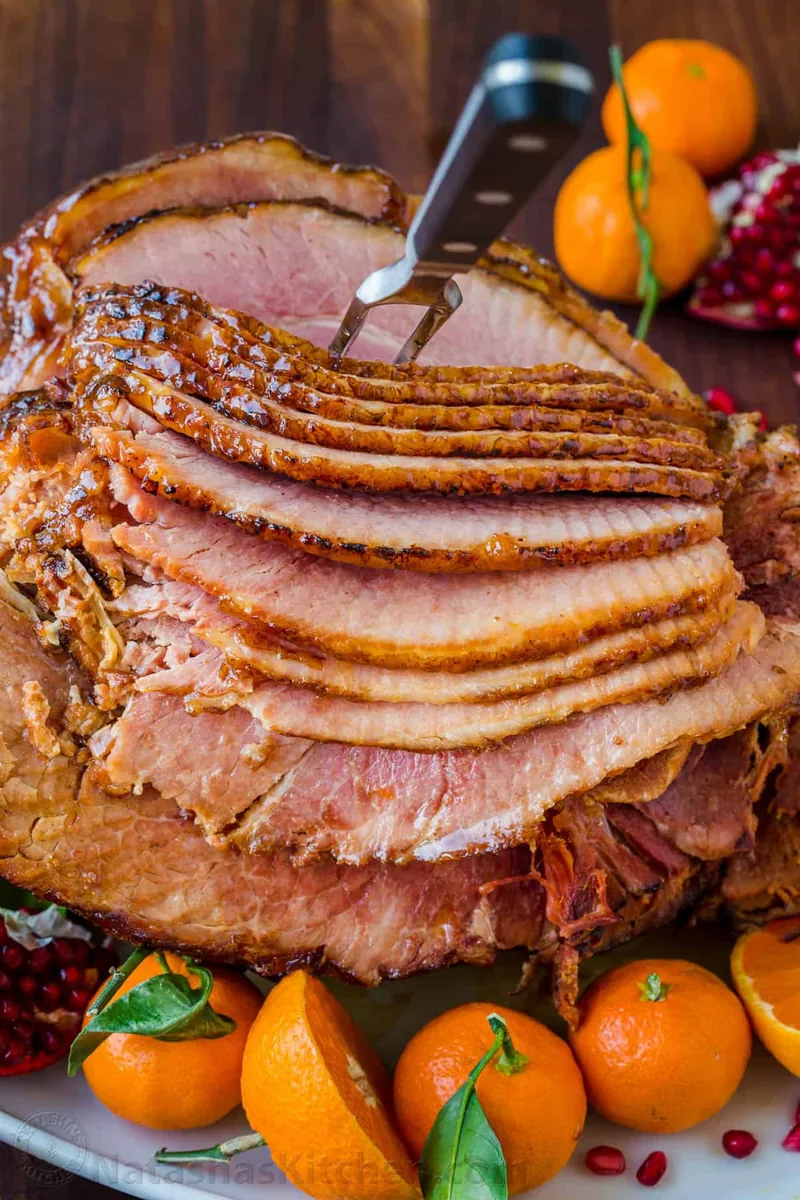
A spiral-sliced, fully cooked ham is one of the easiest Christmas mains because you are mostly reheating it and building a sticky glaze. This version uses apricot preserves, honey, brown sugar, Dijon, and butter, brushed on in layers so the outside caramelizes.
Quick ingredients
- Fully cooked bone-in ham, spiral-sliced (the original uses about 10 to 15 pounds)
- Apricot preserves
- Honey and packed brown sugar
- Dijon mustard
- Unsalted butter
How to make it
- Let the ham sit at room temperature for about 1 to 2 hours, then heat the oven to 325°F with a rack in the lower third.
- Simmer the apricot preserves, honey, brown sugar, Dijon, and butter until the glaze is the texture of loose honey.
- Set the ham cut-side down in a foil-lined roasting pan, brush on a third of the glaze, cover tightly with foil, and bake about 10 to 11 minutes per pound.
- Raise the oven to 425°F. Uncover the ham and glaze it twice more, roasting uncovered about 10 minutes each time, until the crust is browned. The original recipe aims for about 130°F to 135°F in the oven, then a rest so the ham reaches 140°F, which matches the USDA minimum for reheating fully cooked ham from a USDA-inspected plant. Reheat other cooked hams to 165°F. Rest 15 to 20 minutes and spoon the skimmed pan juices over the slices.
Get the full recipe with exact amounts: Natasha's Kitchen.
2. Dry-Brined Roast Turkey
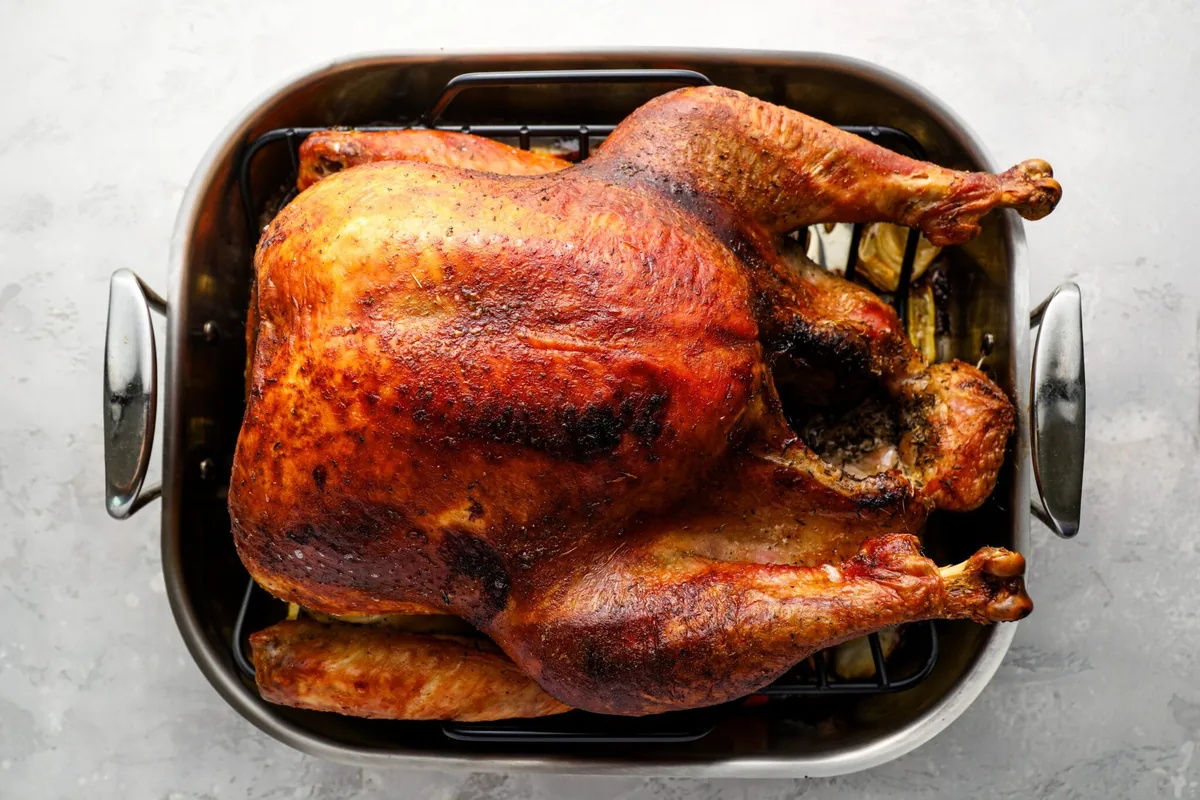
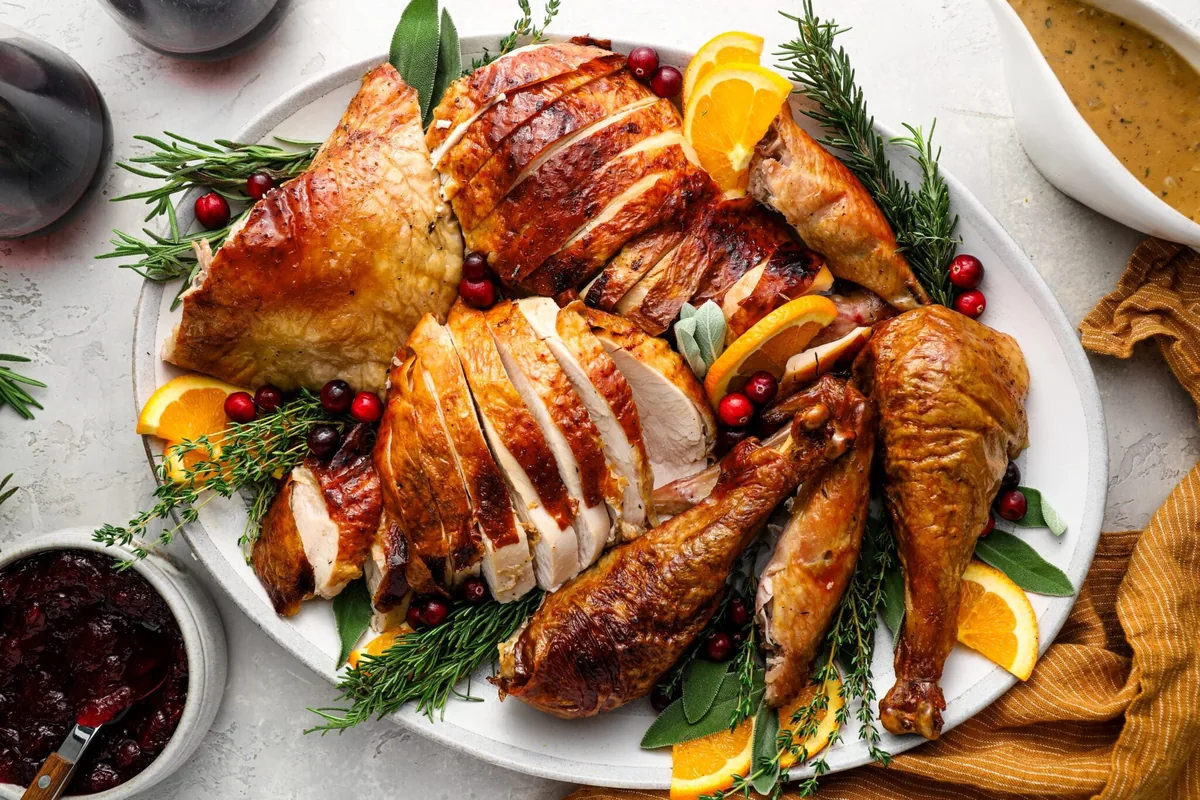
This roast turkey is dry-brined with brown sugar, kosher salt, thyme, sage, and pepper, then buttered and roasted over onion, carrot, and celery. The uncovered rest in the fridge helps the skin dry so it can brown, and it is a straightforward option if turkey is the center of your Christmas table.
Quick ingredients
- 1 whole turkey (the original uses 12 to 14 pounds), patted dry, giblets removed
- Packed light brown sugar and kosher salt
- Dried thyme, dried sage, and black pepper
- Unsalted butter, at room temperature
- Onion, carrots, and celery for the roasting pan
How to make it
- Mix the sugar, salt, thyme, sage, and pepper. Pat the dry brine over the turkey, including the cavity, and refrigerate it uncovered for 24 to 48 hours at 40°F or below.
- Heat the oven to 375°F. Wipe the brine off the outside with damp paper towels (leave what is in the cavity), set the turkey on a rack over the cut vegetables, tuck the wings, and smear it with butter.
- Roast until a thermometer in the thickest part of the breast and thigh reaches 165°F, the USDA minimum for all poultry, about 1 3/4 to 2 1/2 hours. Tent with foil if the skin browns too quickly.
- Tilt the turkey so the cavity juices run into the pan, then rest it 20 to 30 minutes before carving. Use the drippings for gravy. Check the FSIS thawing guide if your turkey is still frozen.
Get the full recipe with exact amounts: Once Upon a Chef.
3. Reverse-Seared Prime Rib
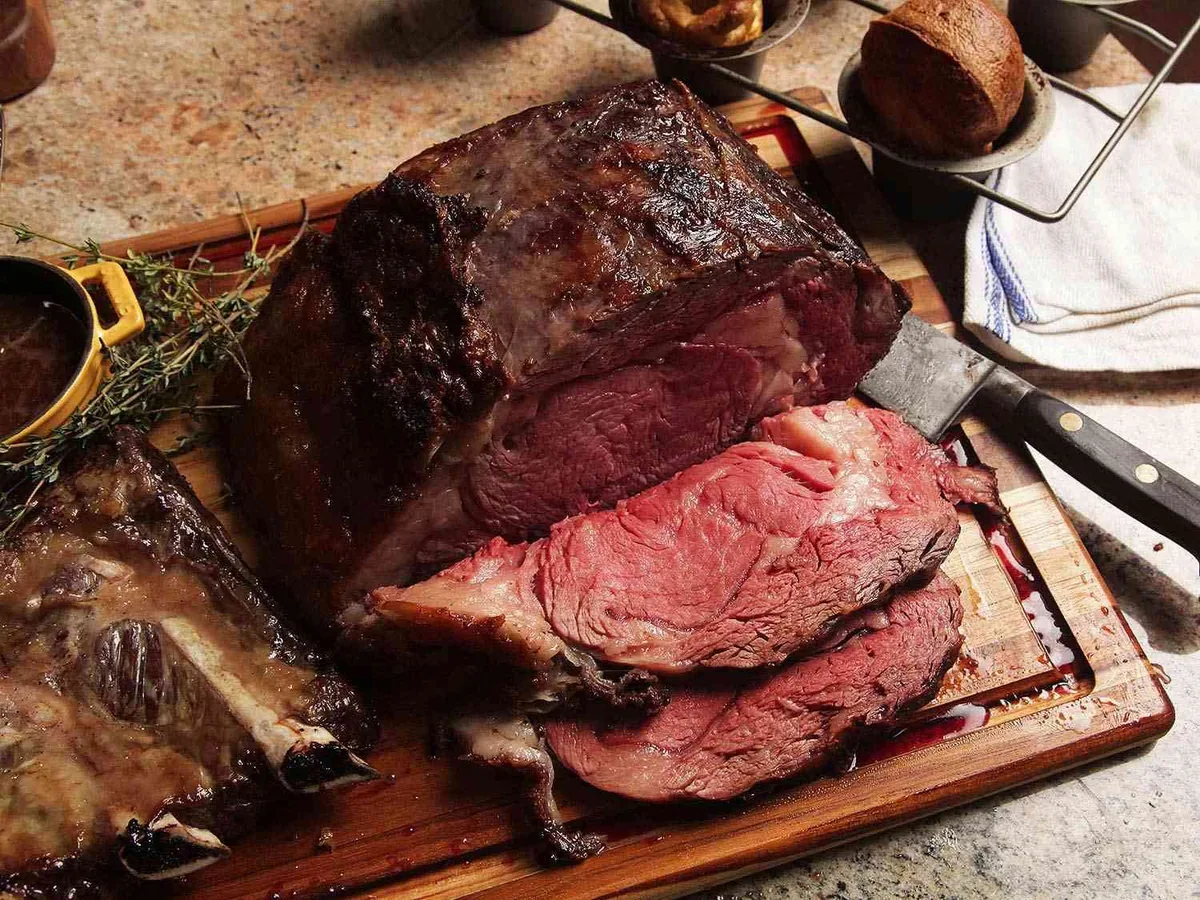
This standing rib roast is seasoned only with salt and pepper, cooked low and slow, rested, then browned in a very hot oven. The method is designed for an even, rosy interior and a crisp exterior, and it works for roasts from a small 3-pound piece to a large holiday roast.
Quick ingredients
- 1 standing rib roast (prime rib), 3 to 12 pounds
- Kosher salt
- Freshly ground black pepper
How to make it
- Heat the oven to its lowest setting, 150°F if your oven can hold it, or 250°F if that is as low as it goes. Season the roast generously and set it fat-cap up on a rack.
- Roast until a thermometer in the center reaches the doneness you are aiming for. In a 150°F oven this can take 5 1/2 to 6 1/2 hours; at 250°F it is closer to 3 1/2 to 4 hours. The original recipe lists 120°F to 125°F for rare and 130°F for medium-rare, which is below the USDA minimum of 145°F with a 3-minute rest for beef roasts.
- Tent the roast loosely with foil and rest it at least 30 minutes (up to 1 1/2 hours). Heat the oven to 500°F to 550°F.
- Return the roast to the hot oven for 6 to 10 minutes, just until the exterior is browned and crisp, then carve and serve.
Get the full recipe with exact amounts: Serious Eats.
4. Herb and Garlic Pork Loin Roast
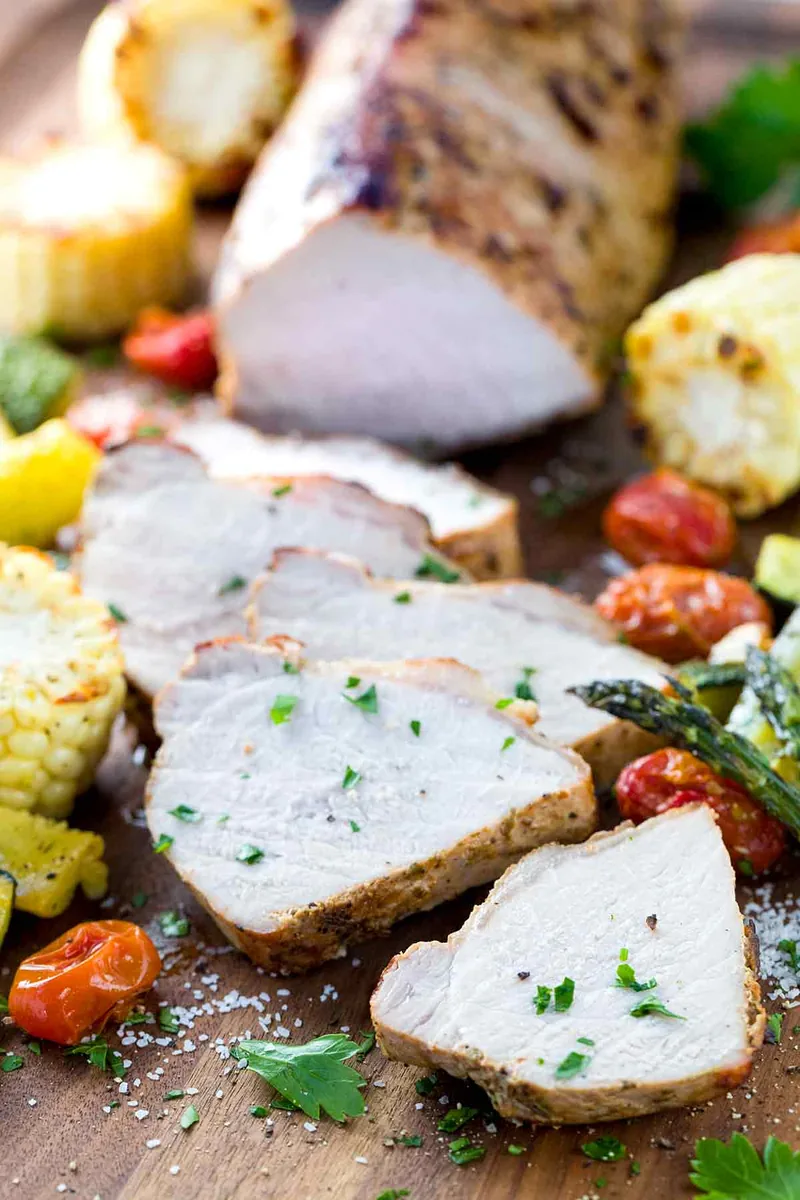
This pork loin is seared first, then roasted on a sheet pan with a mix of vegetables so the main dish and sides share the oven. It is a good option when you want pork on the table without tying up a roasting pan all afternoon.
Quick ingredients
- Pork loin (the original uses a 2 1/2-pound loin fillet)
- Olive oil, garlic, kosher salt, and black pepper
- Corn, zucchini, and yellow squash
- Baby tomatoes, asparagus, and sliced shallots
How to make it
- Heat the oven to 400°F. Sear the pork in a hot skillet with oil until browned on all sides, then transfer it to a plate.
- Toss the corn, zucchini, squash, tomatoes, asparagus, shallots, and garlic with olive oil, salt, and pepper.
- Return the pork to the skillet and roast for 10 minutes, then add the vegetables around it.
- Continue roasting until the thickest part of the pork reaches 145°F, the USDA minimum for pork roasts, then rest at least 3 minutes (the original rests it 10 minutes) before slicing. Serve with the roasted vegetables.
Get the full recipe with exact amounts: Jessica Gavin.
5. Roast Leg of Lamb
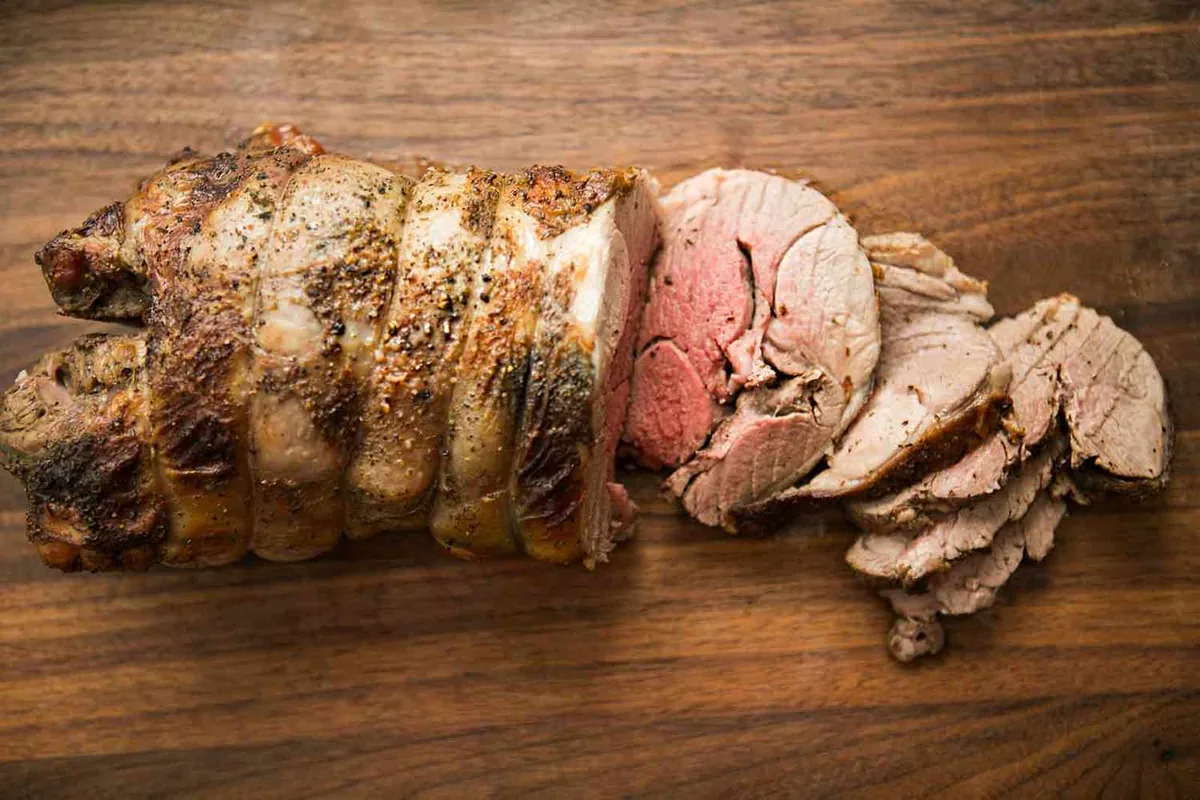
A bone-in or boneless leg of lamb, marinated in orange juice, white wine, garlic, thyme, and rosemary, makes a fragrant Christmas roast if your table is not set on turkey or beef. The meat is roasted on an oven rack with a pan underneath to catch the drippings.
Quick ingredients
- 1 leg of lamb, bone-in or boneless (the original uses about 6 pounds; tie a boneless roast)
- Orange juice and white wine
- Minced garlic
- Fresh thyme and rosemary
- Salt and black pepper
How to make it
- Blend the orange juice, wine, garlic, thyme, rosemary, and pepper, then marinate the lamb in a sealed bag in the refrigerator for several hours or overnight. Let it sit out 1 to 2 hours before roasting.
- Heat the oven to 425°F. Pat the marinade off the lamb, season it well, and place it fattiest-side up directly on the middle rack, with a roasting pan on a lower rack to catch drippings (a little water in that pan helps limit smoke).
- Roast 20 minutes at 425°F, then lower the heat to 300°F and continue until a thermometer reaches a safe temperature. The original recipe describes pulling the roast at 125°F to 135°F for medium-rare; USDA guidance is 145°F with a rest of at least 3 minutes for lamb roasts.
- Rest 25 to 30 minutes, remove any twine, and slice against the grain. You can make a gravy from the drippings.
Get the full recipe with exact amounts: Simply Recipes.
Beef tenderloin and a pastry showstopper
6. Roast Beef Tenderloin with Mushroom Sauce
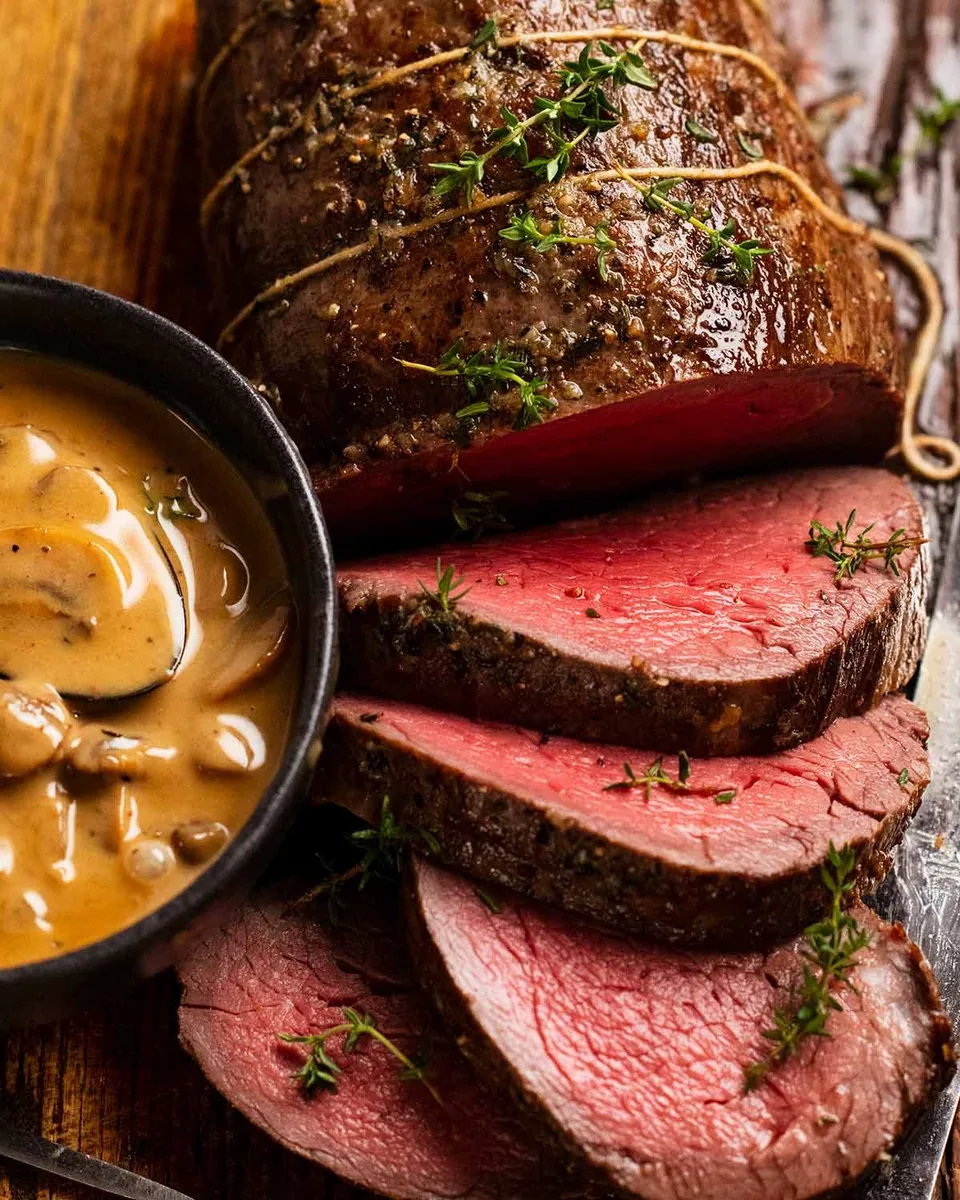
Center-cut beef tenderloin is a smaller roast than prime rib, so it suits a quieter Christmas dinner. This version is salted ahead, seared, slathered with garlic-thyme butter, and roasted at a low temperature, then served with a marsala mushroom cream sauce.
Quick ingredients
- Center-cut beef tenderloin, trimmed and tied (the original uses about 2 to 2 1/2 pounds)
- Kosher salt and black pepper
- Vegetable oil, for searing
- Butter, garlic, and fresh thyme
- Sliced mushrooms, chicken stock, marsala, and heavy cream, for the sauce
How to make it
- Pat the beef dry, season it all over, and refrigerate it uncovered for 12 to 24 hours if you have time. Take it out 2 hours before cooking.
- Sear the roast in a smoking-hot ovenproof skillet until browned, then let it cool briefly so the butter does not melt immediately. Heat the oven to 250°F.
- Slather most of the garlic-thyme butter over the top and sides, roast about 15 minutes, add the rest of the butter, and continue roasting until a thermometer reaches your target. The original aims for 127°F before a 10-minute rest (about 133°F to 136°F after), which is below the USDA minimum of 145°F with a 3-minute rest for beef roasts.
- While the meat rests, make the sauce with the pan juices, mushrooms, thyme, garlic, stock, marsala, and cream, simmering until it thickens. Slice the tenderloin and serve it with the sauce.
Get the full recipe with exact amounts: RecipeTin Eats.
7. Beef Wellington with Red Wine Sauce
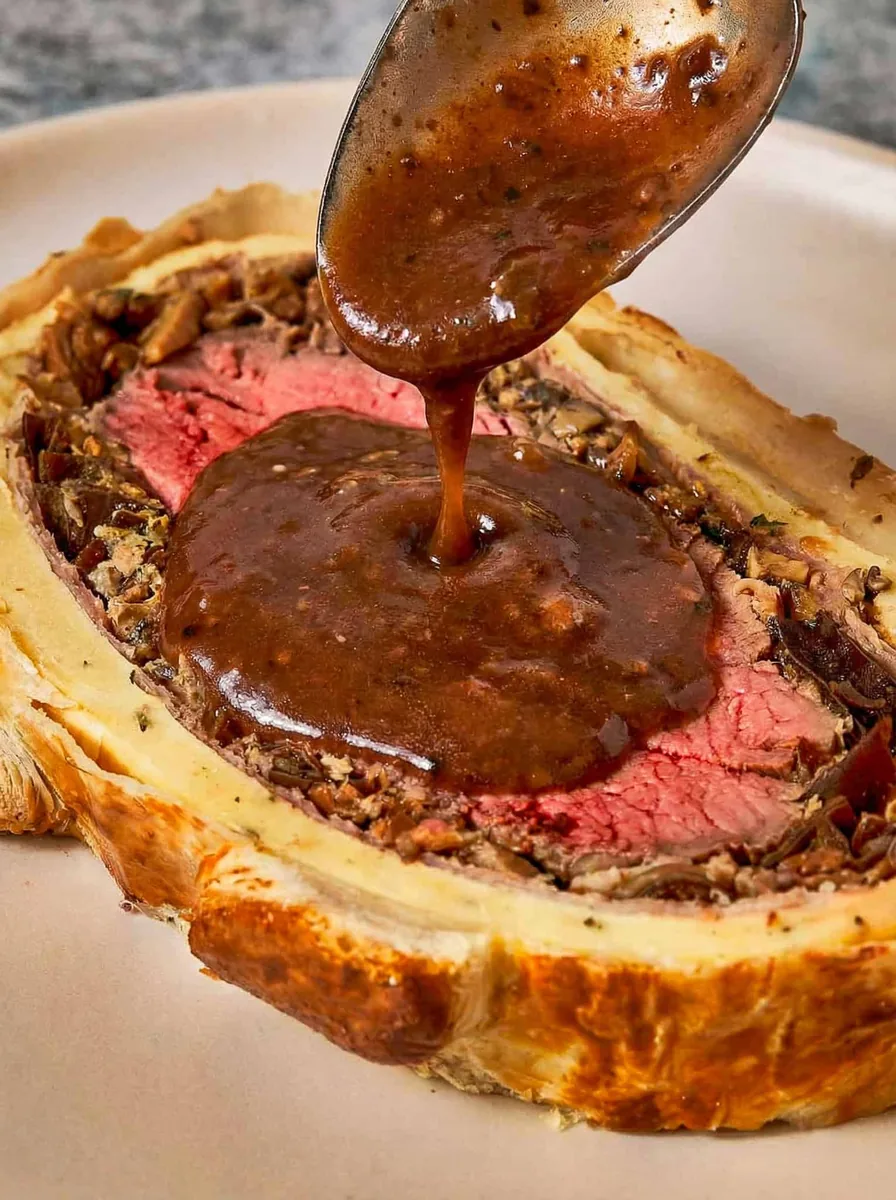
Beef Wellington is the project main of this list: a seared tenderloin wrapped in mushroom duxelles, prosciutto, a thin crêpe, and puff pastry, then baked until the pastry is deep golden. The original serves it with a red-wine and Madeira sauce finished with a little truffle paste.
Quick ingredients
- Center-cut beef tenderloin (the original uses about 1.3 pounds)
- Olive oil, salt, pepper, and Dijon mustard
- Mushrooms, shallots, thyme, garlic, and parsley, for the duxelles
- Prosciutto and all-butter puff pastry
- Eggs, flour, milk, and thyme, for a thin crêpe wrap
- Red wine, Madeira or port, beef stock, and butter, for the sauce
How to make it
- Season and quickly sear the beef on all sides, just to brown it, then cool it completely and brush it with Dijon.
- Cook the finely chopped mushrooms with shallots, thyme, and garlic until the mixture is dry, then chill it. Make thin thyme crêpes and let them cool.
- Layer overlapping prosciutto, spread on the cold duxelles, and roll the beef up tightly in plastic wrap. Chill at least 1 hour, then wrap the log in a crêpe and chill again.
- Enclose the log in puff pastry, seal it with egg wash, and decorate if you like. Bake at 400°F for 15 minutes, then at 350°F for 25 to 30 minutes. The original aims for about 127°F inside, which is below the USDA minimum of 145°F with a 3-minute rest for beef roasts. Rest 15 minutes, and pour the sauce around the slices rather than over the pastry.
Get the full recipe with exact amounts: Cafe Delites.
Smaller gatherings, fish, and make-ahead mains
8. Roasted Cornish Hens
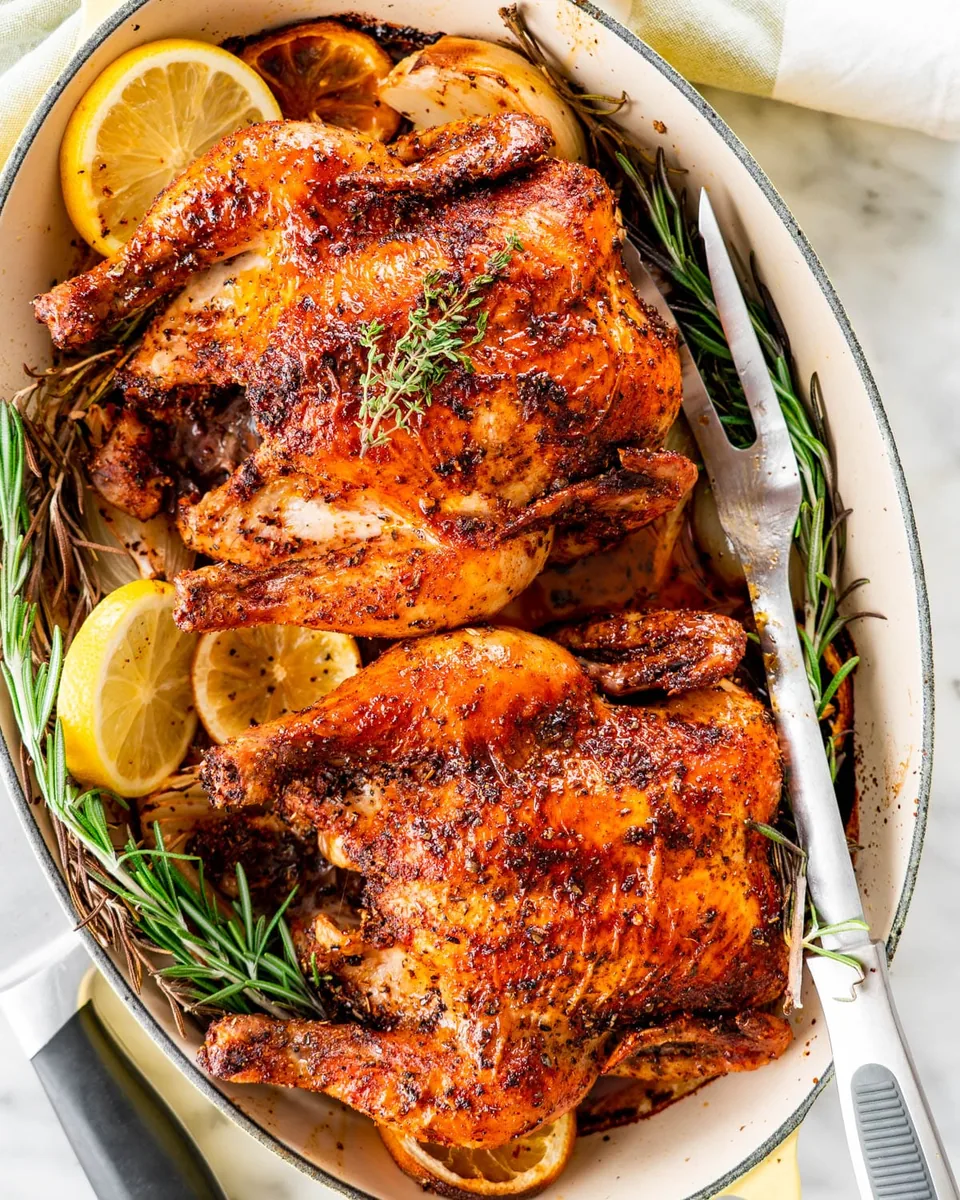
Cornish hens look festive on a platter and are easier to portion than a whole turkey, which makes them useful for a smaller Christmas dinner. These are seasoned with a smoked-paprika rub and roasted over lemon, onion, garlic, rosemary, and thyme.
Quick ingredients
- 2 whole Cornish hens (about 1 1/2 pounds each)
- Olive oil, salt, pepper, Italian seasoning, smoked paprika, garlic powder, and red pepper flakes
- Rosemary and thyme sprigs
- Onion, garlic cloves, and lemon slices
How to make it
- Mix the dry rub, pat the hens dry, and season them inside and out.
- Heat the oven to 425°F. Scatter rosemary, thyme, garlic, onion, and some of the lemon in a roasting pan, set the hens on top, and drizzle them with olive oil.
- Roast 50 to 60 minutes, until a thermometer in the thickest part of the breast reaches 165°F, the USDA minimum for poultry.
- Rest 20 minutes, then garnish with more herbs and lemon. The original recipe serves them over mashed potatoes.
Get the full recipe with exact amounts: Jo Cooks.
9. Skillet Roast Chicken with Gravy
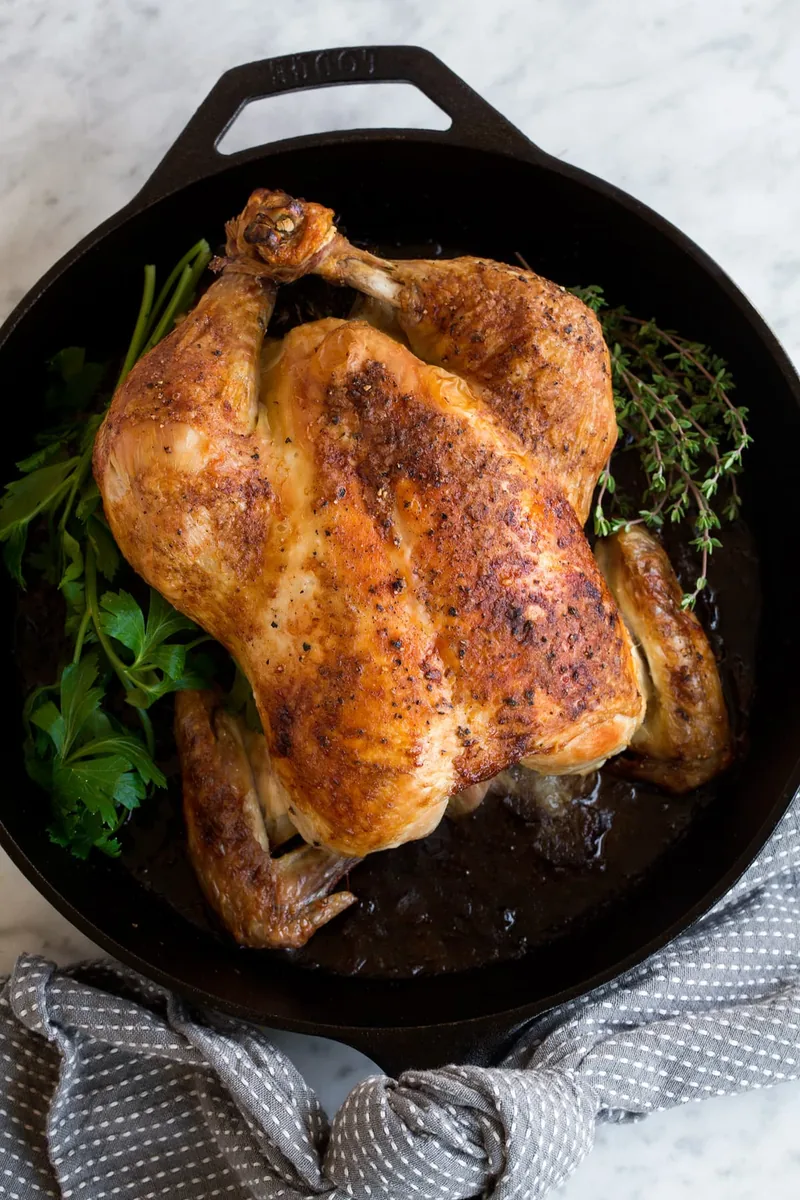
A whole roast chicken in a cast-iron skillet is a practical Christmas main when you are not feeding a crowd. This one is stuffed with garlic, onion, and poultry herbs, rubbed with butter, and roasted until the skin is golden, with a simple pan gravy from the drippings.
Quick ingredients
- 1 whole chicken (the original uses about 6 pounds)
- Salt and black pepper
- Smashed garlic cloves and onion wedges
- Fresh poultry herbs (thyme, rosemary, sage, and parsley in the original notes)
- Softened butter
- Chicken broth, cornstarch, and optional cream, for gravy
How to make it
- Heat the oven to 425°F. Pat the chicken dry, season the cavity, and stuff it with garlic, onion, and herbs.
- Set the chicken breast-side up in an oiled skillet, rub it with butter, season the outside, tie the legs, and tuck the wings.
- Roast until a thermometer in the thickest part of the thigh reaches 165°F, the USDA minimum for poultry, about 1 1/2 hours for a 6-pound bird. Rest 10 to 15 minutes.
- Make gravy in the same skillet: loosen the browned bits with chicken broth, whisk in a cornstarch slurry, and simmer until thickened. Add a little cream if you want it richer.
Get the full recipe with exact amounts: Cooking Classy.
10. Garlic Butter Baked Salmon
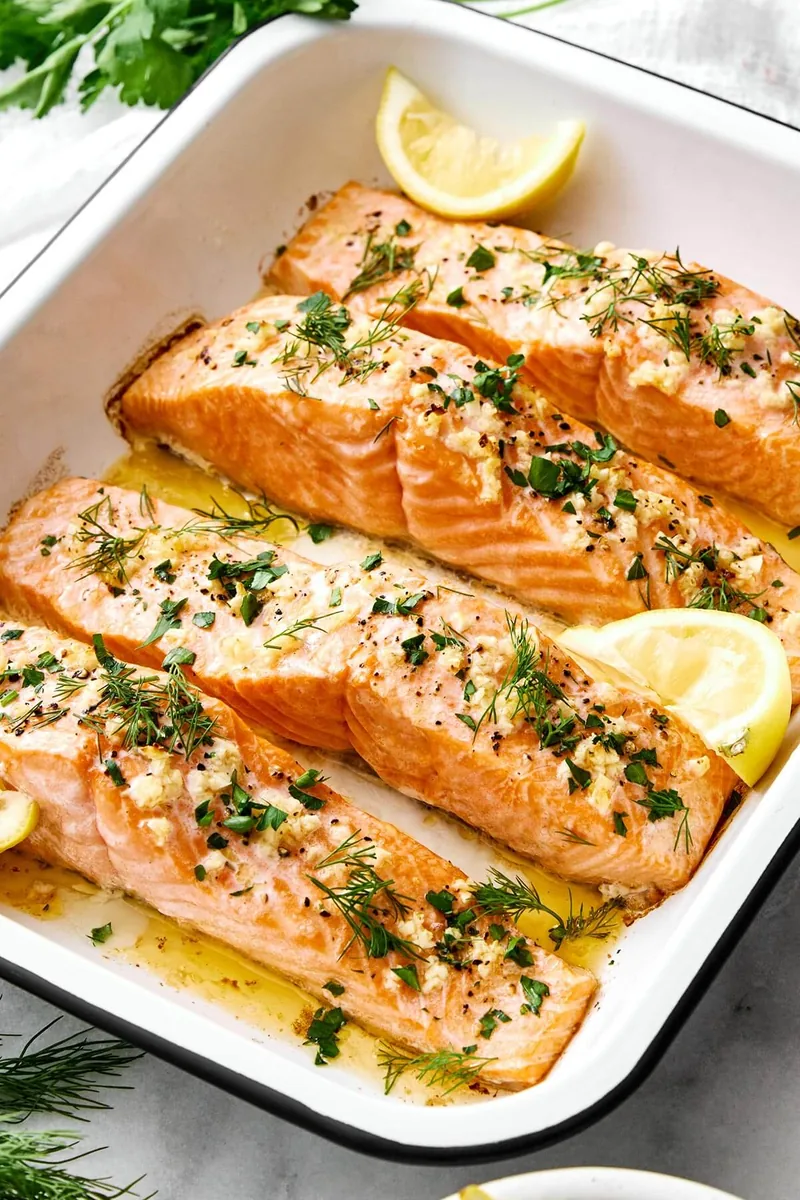
Baked salmon is a lighter Christmas main and cooks in about 15 minutes once the fillets are at room temperature. This version is brushed with lemon butter, topped with garlic, and finished with parsley and dill.
Quick ingredients
- Salmon fillets (the original uses four 6-ounce fillets)
- Melted butter and lemon juice, plus lemon slices for serving
- Minced garlic
- Kosher salt and black pepper
- Chopped parsley and dill
How to make it
- Heat the oven to 375°F and let the salmon sit at room temperature for about 15 minutes.
- Stir the melted butter with lemon juice, place the fillets in a baking dish, and brush them with the butter mixture. Top with garlic, salt, and pepper.
- Bake 12 to 15 minutes, until the thickest part reaches 145°F, the USDA minimum for fish, or until the flesh is no longer translucent and flakes easily.
- Sprinkle with parsley and dill and serve with extra lemon.
Get the full recipe with exact amounts: Downshiftology.
11. Make-Ahead Lasagna
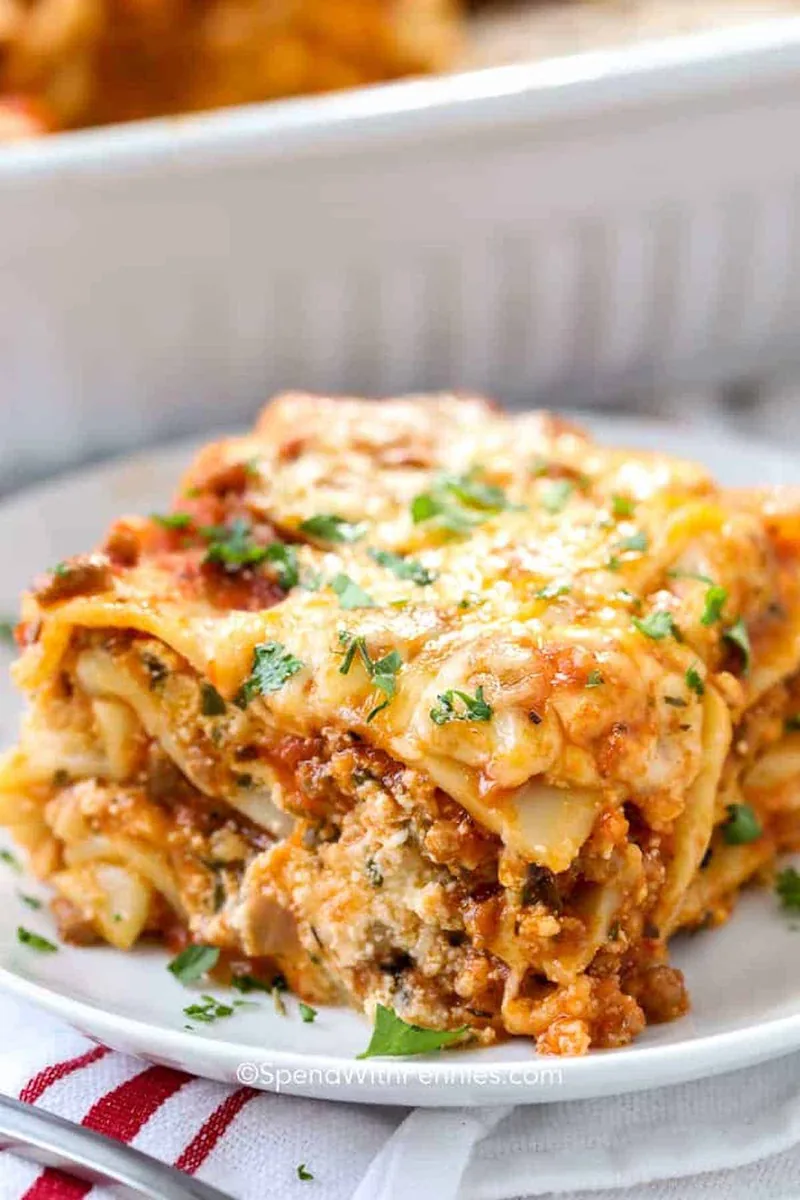
Lasagna is the make-ahead main on this list: a classic beef-and-sausage sauce layered with ricotta, mozzarella, Parmesan, and noodles. You can assemble it up to 2 days ahead and refrigerate it, or freeze it before or after baking, which is helpful when the oven is already full on Christmas Day.
Quick ingredients
- Lasagna noodles
- Lean ground beef and Italian sausage
- Onion, garlic, pasta sauce, tomato paste, and Italian seasoning
- Ricotta (or cottage cheese), mozzarella, Parmesan, parsley, and an egg
How to make it
- Heat the oven to 350°F. Boil the noodles until they are just tender, then drain and rinse them with cold water.
- Brown the beef, sausage, onion, and garlic until no pink remains, then stir in the sauce, tomato paste, and seasonings and simmer a few minutes. Mix the ricotta filling with mozzarella, Parmesan, parsley, egg, and salt.
- Layer sauce, noodles, and the cheese mixture in a 9-by-13-inch pan, ending with noodles and sauce. Cover with foil and bake 45 minutes, then uncover, add the remaining mozzarella and Parmesan, and bake about 15 minutes more, until browned and bubbly. Casseroles should reach 165°F in the center.
- Rest at least 15 minutes before cutting. To make it ahead, refrigerate the assembled pan for up to 2 days (add extra baking time if it is cold) or freeze it, tightly wrapped, for up to 3 months, then thaw in the refrigerator overnight.
Get the full recipe with exact amounts: Spend With Pennies.
12. Stuffed Acorn Squash
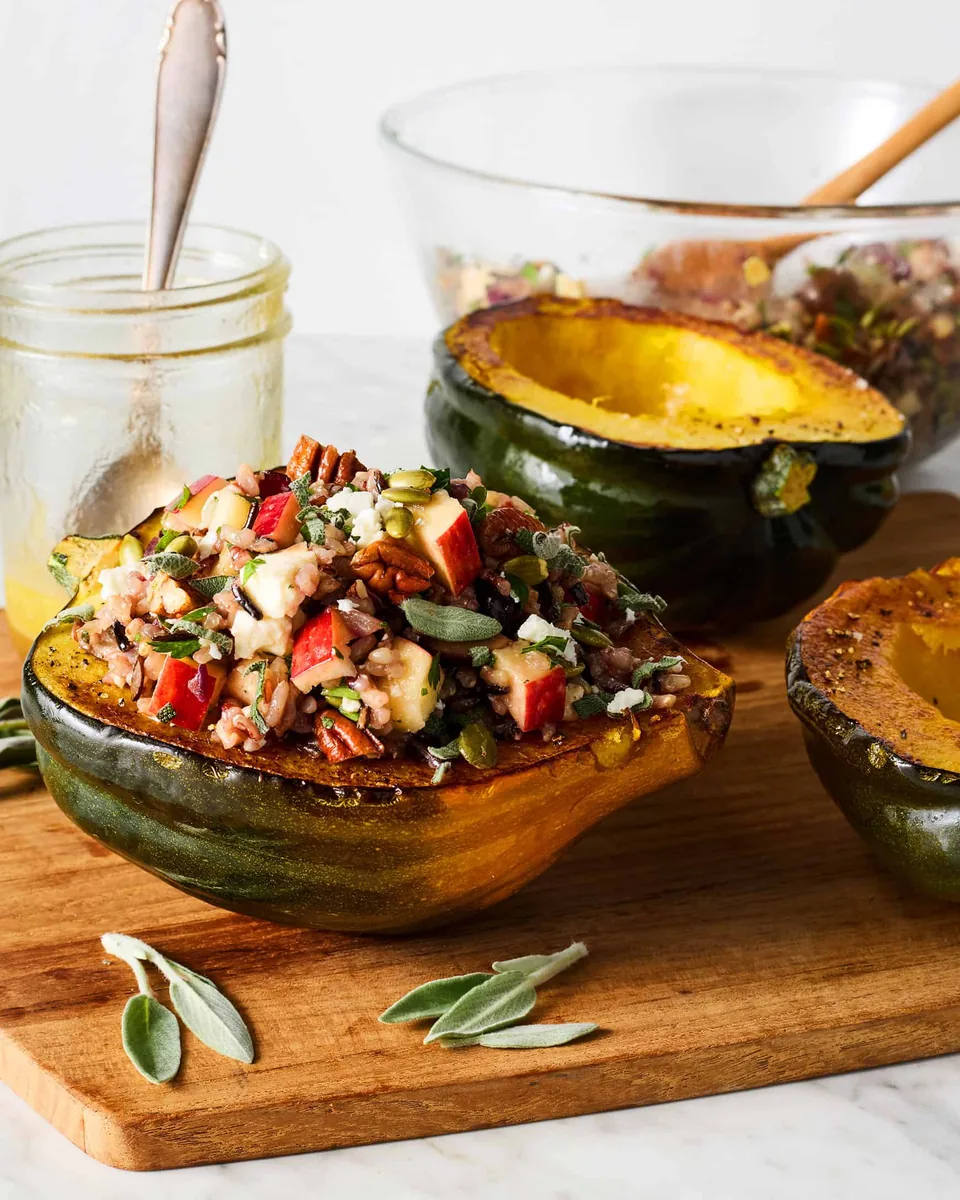
This is a genuine vegetarian main, not a side: roasted acorn squash halves filled with a brown-and-wild-rice mix, mushrooms, apple, feta, cranberries, pecans, and pepitas. The maple-cider dressing makes it feel like a holiday platter even without a roast in the center of the table.
Quick ingredients
- Acorn squash, halved and seeded (the original uses 4 medium squash)
- Olive oil, salt, and black pepper
- Cremini mushrooms, red onion, and fresh sage
- Cooked brown rice or a wild-rice blend
- Apple, feta, parsley, dried cranberries, toasted pecans, and pepitas
- Apple cider vinegar, maple syrup, garlic, Dijon, and olive oil, for the dressing
How to make it
- Heat the oven to 425°F. Rub the squash halves with olive oil and salt and roast them cut-side down until they are fork-tender, 25 to 40 minutes.
- On a second sheet, roast the mushrooms, sage, and onion until tender and browned at the edges.
- Whisk the vinegar, maple syrup, garlic, salt, mustard, pepper, and olive oil into a dressing. Toss the rice with the roasted vegetables, apple, feta, parsley, cranberries, pecans, pepitas, salt, and half the dressing.
- Brush the warm squash with more dressing, fill the halves with the rice mixture, and garnish with sage. Serve the remaining dressing on the side.
Get the full recipe with exact amounts: Love and Lemons.
FAQ
What internal temperature should Christmas dinner meats reach?
According to the USDA FSIS temperature chart, beef, pork, and lamb roasts should reach 145°F and rest at least 3 minutes; fully cooked ham from a USDA-inspected plant should be reheated to 140°F (165°F for other cooked hams); all poultry should reach 165°F; fish should reach 145°F; and casseroles and leftovers should reach 165°F. Check with a thermometer rather than going by color or a photograph.
How do I thaw a turkey safely?
The FSIS turkey thawing guide lists three safe methods: in the refrigerator, allowing about 24 hours for every 4 to 5 pounds; in cold water, allowing about 30 minutes per pound and changing the water every 30 minutes, then cooking the turkey immediately; or in the microwave if it fits, also cooking it immediately. Do not thaw a turkey on the counter, even if the center is still frozen.
Which mains work well for a small gathering?
Cornish hens, a skillet roast chicken, baked salmon, beef tenderloin, or stuffed acorn squash all fit a smaller table better than a 12-pound turkey or a large prime rib. A 2- to 2 1/2-pound tenderloin or a couple of hens can feel just as much like a holiday meal without leaving a week of leftovers.
What can I make ahead?
The lasagna can be assembled and refrigerated for up to 2 days, or frozen for up to 3 months and thawed in the fridge overnight. The turkey dry brine needs 24 to 48 hours in the refrigerator. The lamb and the tenderloin can be seasoned or marinated the day before, and Beef Wellington has several chilling steps built in. Roast the turkey, prime rib, ham, or chicken on the day you serve them, then keep the finished food out of the 40°F to 140°F danger zone.
How should I store leftovers?
The FSIS leftovers guidance says to refrigerate perishable food within 2 hours of cooking or serving (1 hour if the temperature is above 90°F), to cut large roasts into smaller pieces so they cool faster, to use leftovers within 3 to 4 days, and to reheat them to 165°F.
What to serve with Christmas dinner
Once you have chosen a main, the rest of the table can stay simple. We have already collected Christmas side dishes, easy Christmas appetizers, and charcuterie board ideas if you want something to set out before the roast comes to the table.
For the rest of the day, there are make-ahead Christmas breakfast ideas, festive Christmas drinks, Christmas desserts, and Christmas cookie recipes (plus cookie decorating ideas). If you are planning a get-together around the meal, our Christmas party ideas post has themes, games, and a simple menu plan.