How to Host a Holiday Gathering in a Small Apartment (A Step-by-Step Checklist)
A holiday dinner sounds lovely until you picture coats on the sofa, a turkey filling the fridge, and three people trying to squeeze past the oven. You do not need a bigger apartment to make it work. You need a guest list, a floor plan, and a menu that agree with one another.
To host a holiday gathering in a small apartment, plan seats and clear walking routes first, give food and drinks separate homes, and schedule every dish around the kitchen you actually have. This step-by-step checklist works for Thanksgiving, Friendsgiving, or Christmas without turning your home into an event venue.
The small-apartment hosting plan at a glance
- Two to three weeks before: test seating, set a spending limit, invite guests, and ask about food and access needs.
- One week before: assign potluck dishes, map oven time, and reserve refrigerator space.
- Several days before: start refrigerator thawing if needed and gather serving supplies.
- The day before: set the room, choose a coat spot, and prepare only foods suited to advance preparation.
- Party day: finish cooking, welcome guests, manage food temperatures, and pack leftovers promptly.
1. Two to three weeks before: let the room set the guest list
Put the chairs where they will actually go before inviting anyone. Set out plates and glasses, pull chairs back as if people were sitting down, and walk from the entrance to the bathroom and kitchen. If a chair traps someone against a wall, or a guest would need to move for every kitchen trip, change the layout or invite fewer people.
For a seated meal, count comfortable dining places—not every surface a person could perch on. For a casual gathering, check that everyone can sit comfortably at the same time, and say in the invitation that dinner will be buffet-style. Ask privately about seating or access needs; floor cushions and tall stools are not interchangeable with chairs.
Choose a total spending limit, then divide it between food, drinks, and any missing essentials. Borrow extra chairs or dishes before buying things you will have to store afterward. Your invitation should include the start time, meal format, RSVP date, and how contributions will be organized. Ask guests about dietary restrictions before building the menu.
Budget note: A smaller guest list with a complete meal usually makes more sense than buying furniture to fit a bigger one. For invitations and general potluck coordination, use our Friendsgiving planning guide; keep this checklist for the apartment logistics.
2. Two weeks before: make a seating and serving plan
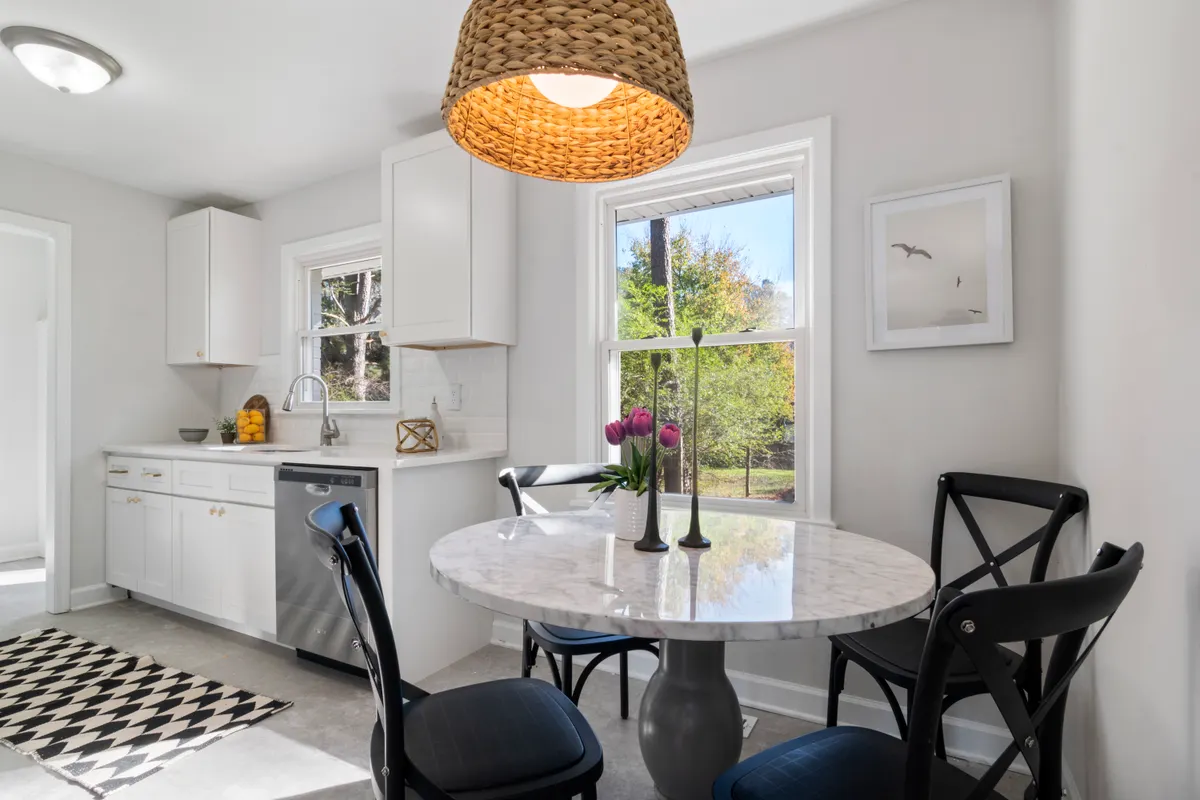
Give each area one main job: the table is for eating, a clear counter is for serving, and a separate side surface is for drinks. In a studio, move a lightweight side table rather than pushing a heavy sofa somewhere it does not fit. Keep the route to the door open; shared hallways are not extra party space.
- If you have a dining table: serve food from a counter so platters do not compete with elbows. Keep water within easy reach.
- If you have a sofa and small table: choose food that is manageable with a fork, provide stable places for drinks, and offer proper-height seating to anyone who needs it.
- If you borrow a folding table: set it up completely, check that its legs lock, and try the chairs before the day of the gathering. Do not balance a tabletop across mismatched furniture.
Walk the buffet route holding an empty plate. Put plates first, food next, and napkins and utensils at the end. If people have to backtrack for a fork, swap the order now. Move drinks away from the oven so refills do not interrupt cooking.
Renter-friendly: Favor freestanding decorations and existing furniture over new wall attachments. Follow your lease and any mounting-product instructions rather than assuming an adhesive is damage-free.
3. One week before: build a menu your oven can handle
Choose the main dish first, then add sides that use different equipment. A roast, a stovetop vegetable, a cold salad, rolls, and dessert are a workable planning pattern—not a required menu. A Christmas soup supper or a Friendsgiving meal centered on a smaller main may fit your space better than a whole turkey.
Write a kitchen slot beside each dish: oven temperature, cooking or reheating time from its recipe, pan size, burner needed, and refrigerator space. Fit the actual pans into the cold oven to check dimensions. If two dishes need incompatible temperatures at the same time, change one dish instead of hoping it works out.
Assign potluck contributions specifically: “Please bring a salad ready to serve with its dressing and tongs” is more useful than “Bring a side.” Ask whether a contribution arrives hot or chilled, how it will travel safely, and whether it needs immediate refrigeration or reheating. Request ingredient information and keep separate serving utensils; labels alone cannot guarantee an allergen-free meal.
Browse our Thanksgiving side dish ideas for options, then follow the original recipe for yields, timing, and storage. Cut one oven-dependent dish if the schedule is already crowded.
Planning shortcut: Make a simple list with five columns: dish, person responsible, equipment, start time, and serving dish. Add a separate cleanup helper so the cook is not also managing every plate.
4. Several days before: reserve fridge space and plan thawing
Clear space for ingredients and leftovers before the grocery trip. Put empty serving containers on the shelf to check the footprint, then remove them until needed. Use an appliance thermometer: FoodSafety.gov recommends a refrigerator temperature of 40°F (4°C) or below. A chilly balcony, windowsill, or shared hallway is not a substitute for controlled cold storage.
If serving a frozen turkey, work backward from cooking day. USDA advises allowing approximately 24 hours per 4 to 5 pounds for refrigerator thawing at 40°F or below, with a container to catch juices. A refrigerator-thawed turkey can stay refrigerated for another 1 to 2 days before cooking. Reserve a low spot where the container cannot drip onto ready-to-eat foods; do not thaw the bird on the counter.
If the bird and its drip-catching container do not fit, choose a different main or a smaller cut with its own preparation instructions. Do not discover this problem after buying it. Keep nonperishable drinks outside the refrigerator until needed so they do not occupy space intended for perishable food.
5. The day before: handle coats, decor, and neighbor courtesy
Choose a coat spot that is not your dining seating: clear part of a closet or designate a clean bed with permission if it belongs to a housemate. Keep bags in a defined indoor spot, away from the door. Set a tray for wet shoes if guests will remove them, and ask people what works for them rather than making shoe removal a surprise.
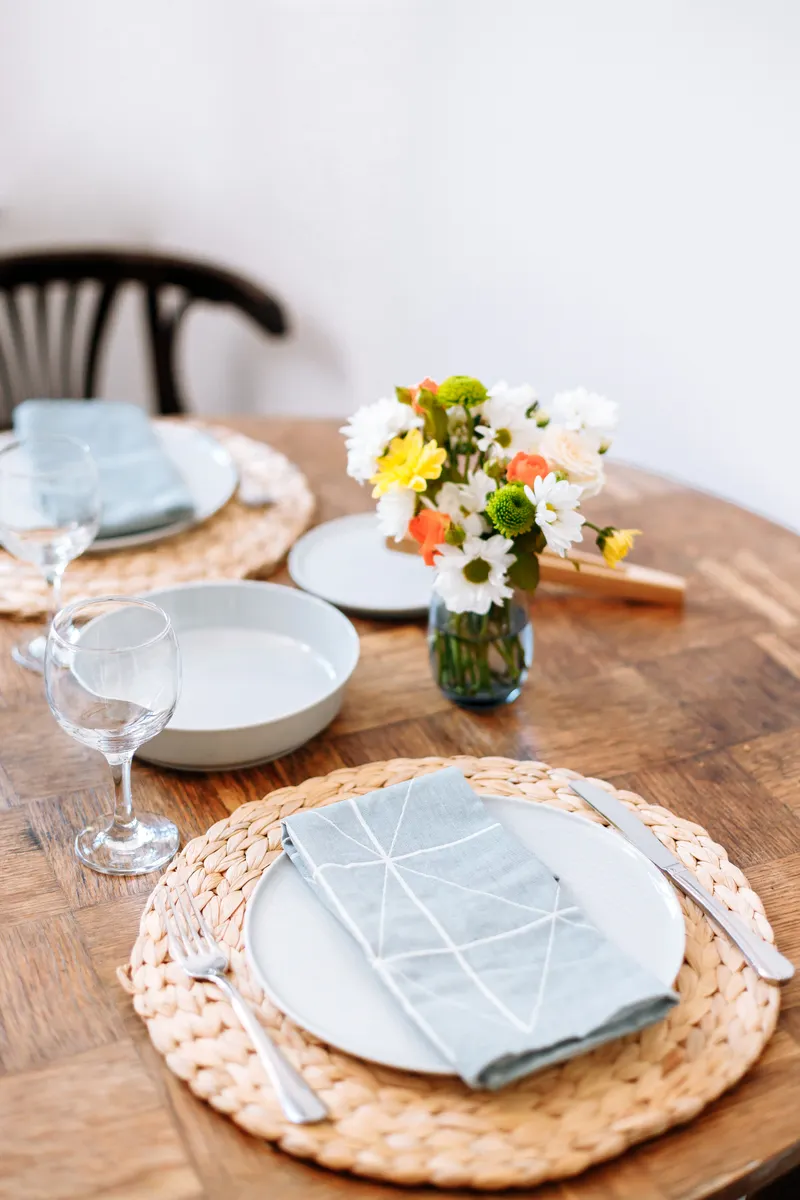
Set the table with what you own. A cloth napkin or a few small seasonal accents can do the work of a large centerpiece. For Thanksgiving, borrow a detail from our Thanksgiving decor ideas; for Christmas, change the colors rather than adding more objects. Keep serving and walking surfaces usable.
Check building rules and quiet hours, choose a reasonable finish time, and give nearby neighbors a brief heads-up if appropriate. This is courtesy, not permission to exceed the rules. Keep speakers away from shared walls and plan for quieter conversation later. Tell guests how to find the apartment without gathering in the hallway.
Easy-to-miss jobs: Put out toilet paper and a clean hand towel, empty the trash, and make space for dirty dishes. Prepare only the foods your chosen recipes say can be made ahead; making everything early is not automatically the safer or easier option.
6. Party day: run a small buffet without a kitchen traffic jam
Finish the room before the final cooking stretch. Set out labeled empty serving dishes, fill the water pitcher, and place utensils where guests can find them. Ask one willing guest to direct coats and drinks while you handle the hot food. Keep the cooking area for the people actually cooking.
Use a food thermometer rather than color or guesswork. USDA food-safety guidance calls for poultry to reach 165°F. Keep hot food at 140°F or warmer and cold perishable food at 40°F or below. If your setup cannot maintain those temperatures, put out smaller portions and replenish with properly held food rather than leaving the whole batch on the table.
Set a reminder when perishable food comes out. USDA says to refrigerate leftovers within 2 hours of cooking or removal from hot holding, or within 1 hour if the surrounding temperature is above 90°F. Discard perishable food left out beyond those limits. The clock does not restart when you move a platter to another room.
7. Before the evening ends: pack leftovers, then clean
Divide leftovers into shallow containers and refrigerate promptly; do not wait for a big pot to cool completely on the counter. USDA says hot food can go directly into the refrigerator, and cooked leftovers generally keep for 3 to 4 days refrigerated. Label containers with the date, and freeze portions you will not use in time. Reheat leftovers to 165°F.
Pack take-home portions with safe transport in mind, not as a reason to keep food on the buffet longer. Then scrape dishes, load the dishwasher if you have one, and wipe the food-preparation surfaces. Leave a clear sink and walking route; decorative cleanup can wait until tomorrow.
Your final small-apartment holiday checklist
- Count seats and test routes with chairs pulled out.
- Confirm food needs, contributions, and access needs.
- Assign separate spots for food, drinks, coats, and dishes.
- Match every recipe to an oven, burner, fridge shelf, or no-cook slot.
- Check the refrigerator thermometer and any turkey-thawing schedule.
- Set a food-safety reminder and have shallow leftover containers ready.
- Respect building rules, quiet hours, and shared spaces.
A welcoming holiday gathering does not require a perfect apartment. Give people somewhere comfortable to sit, make the meal manageable, and leave yourself enough room to enjoy their company.