How to Keep Herbs Alive on a Winter Windowsill
Indoor herbs in winter rarely die of cold. They die of dim light, a watering can that never stops, and a pane of glass that chills the roots at night. Fix those three things and a kitchen windowsill can keep producing basil, mint, parsley and chives until spring, even in an apartment with no garden.
The plants also need a different rhythm in winter. Growth slows, so water and fertilizer needs drop at the same time that light does. This guide covers the setup, a week-by-week care calendar, and the watering differences between soft-leaved herbs and woody ones like rosemary.
Quick Answer
- Light: 6 to 8 hours of direct sun a day. A south-facing window comes first, then west or east. Anything less needs a grow light.
- Water: check the top 1 inch (2.5 cm) of soil. Basil stays lightly moist; rosemary, thyme, oregano and sage should dry out first.
- Temperature: about 65 to 70°F (18 to 21°C) by day and 55 to 60°F (13 to 16°C) at night. Basil is injured below 50°F (10°C).
- Rhythm: rotate pots weekly, feed only plants putting out new leaves, and expect smaller harvests than in summer.
Why Herbs Struggle on a Winter Windowsill
Light is the limiting factor indoors, and winter makes it worse. Penn State Extension puts the basic requirement at about 6 hours of direct sun for most culinary herbs, while Iowa State Extension asks for closer to 8 hours and notes that even a bright room rarely delivers it in December. A windowsill that blazed in July may now receive two or three hours of weak, low-angle sun.
Less light means slower growth, and slower growth means the plant uses less water. That is why the same watering routine that worked in summer drowns a plant in January: wet soil sits around cool roots for days, and root rot moves in. Yellow lower leaves and a sour smell at the soil line are the usual signature.
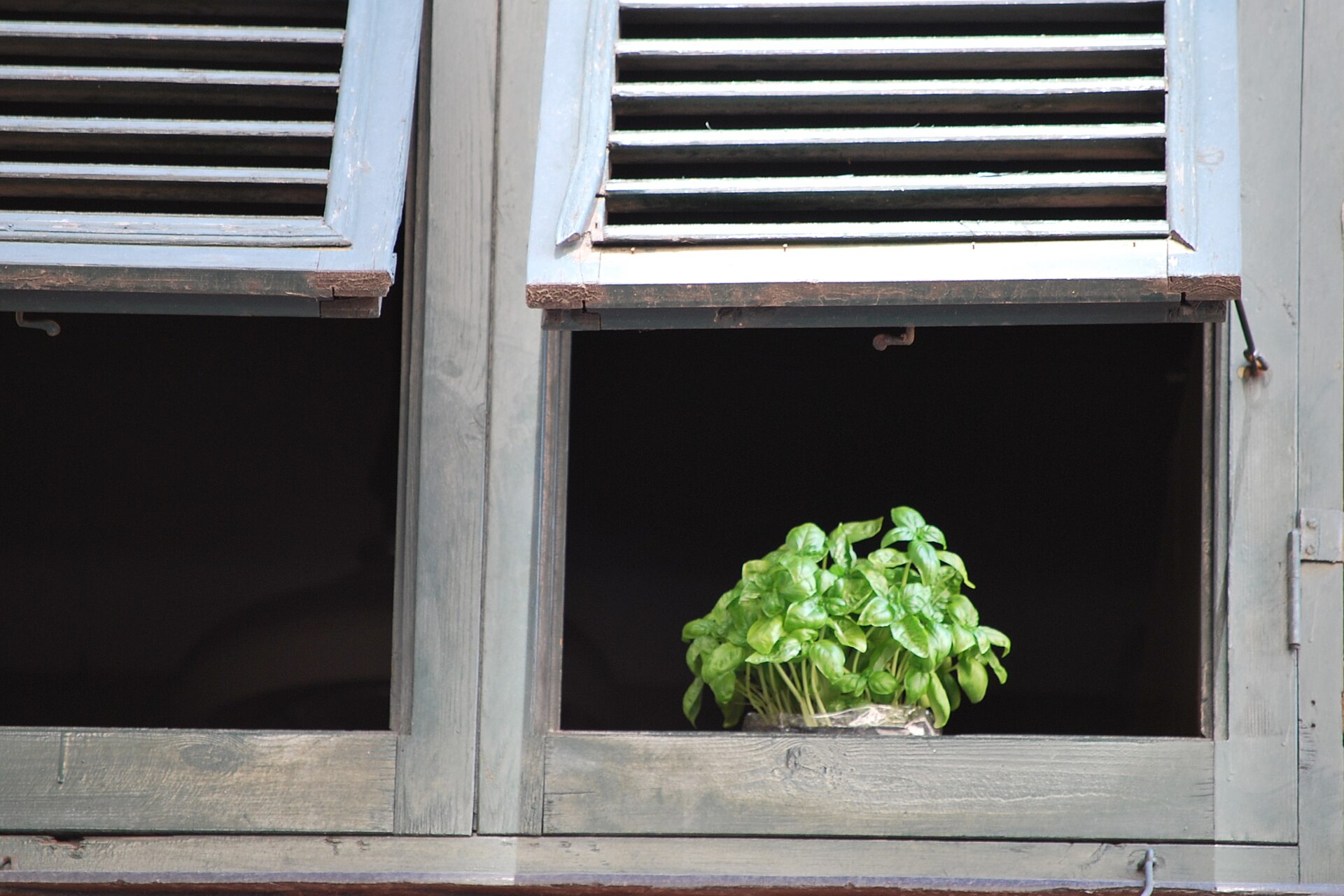
The third problem is the glass itself. On a cold night a single-pane window can drop close to the outdoor temperature, and tender herbs touching it take damage. Penn State Extension is blunt about basil (Ocimum basilicum): it cannot survive below 50°F (10°C) and should not be kept on windowsills during winter months. Move basil a few inches back at night, or keep it on an interior shelf under a light.
Set Up the Windowsill Before You Bring Plants In
Do the setup once, in fall, and the rest of winter becomes maintenance.
- Choose the window by exposure. South first, west second, east third. A north window gives no direct sun and will not carry most herbs without supplemental light.
- Keep leaves off the glass. A plant stand or a shelf set back 4 to 6 inches (10 to 15 cm) protects foliage from night chill and gives air room to move.
- Use one pot per species. Iowa State Extension recommends separate containers because basil, mint and rosemary want different moisture levels. Every pot needs a drainage hole and a saucer.
- Mix a fast-draining potting soil. University of Maryland Extension suggests two parts soilless mix to one part perlite. Garden soil compacts and stays wet indoors.
- Add light if the window falls short. A full-spectrum LED placed 6 to 12 inches (15 to 30 cm) above the leaves, on a timer for 12 to 16 hours a day, closes the winter gap. Keep the timer consistent rather than switching it on by hand.
- Move air. A small fan on low, or space between pots, keeps humidity from settling into mold and fungus gnats.
If the windowsill doubles as a display, group pots by height and keep the tallest at the back so nothing shades its neighbors. A few small pots also work as a seasonal kitchen vignette; our Christmas kitchen decor ideas show how to style that corner without hiding the plants from the light.
Indoor Herbs in Winter: A Care Calendar for November Through February
Indoor herbs need less handling in winter, not more. This is the rhythm to follow from the week you bring plants inside until the days lengthen again.
| When | What to do |
|---|---|
| Before the first frost | Move pots in, check leaf undersides for pests, and remove dead or yellowing growth. Water thoroughly once so the root ball is evenly moist. |
| Every week | Turn each pot a quarter turn so all sides face the light. Check the top 1 inch (2.5 cm) of soil before watering. Pinch the tips of basil and mint to keep them bushy. |
| Every two weeks | Feed only plants that are actively growing, at half the label strength. If growth has stalled, skip feeding until late winter. |
| Once a month | Inspect leaf undersides for spider mites and the soil surface for fungus gnats. Wipe dust off leaves so they can use the light they get. |
| Late February | Expect faster growth as days lengthen. Increase watering gradually, resume regular feeding, and plan repotting for spring. |
One caution on fertilizer: Penn State Extension suggests a low dose every two weeks for indoor herbs, while Iowa State Extension advises avoiding winter feeding altogether. The practical middle is to feed only while the plant is making new leaves. Fertilizer does not replace light, and too much of it pushes soft growth that spindly winter stems cannot support.
How Much Water Each Herb Wants
Watering by the calendar is the fastest way to lose a windowsill herb. Check the soil instead: push a finger in to the first knuckle, or lift the pot to judge its weight. Water in the morning with room-temperature water, and let the pot drain completely.
| Herb | Water when | Winter note |
|---|---|---|
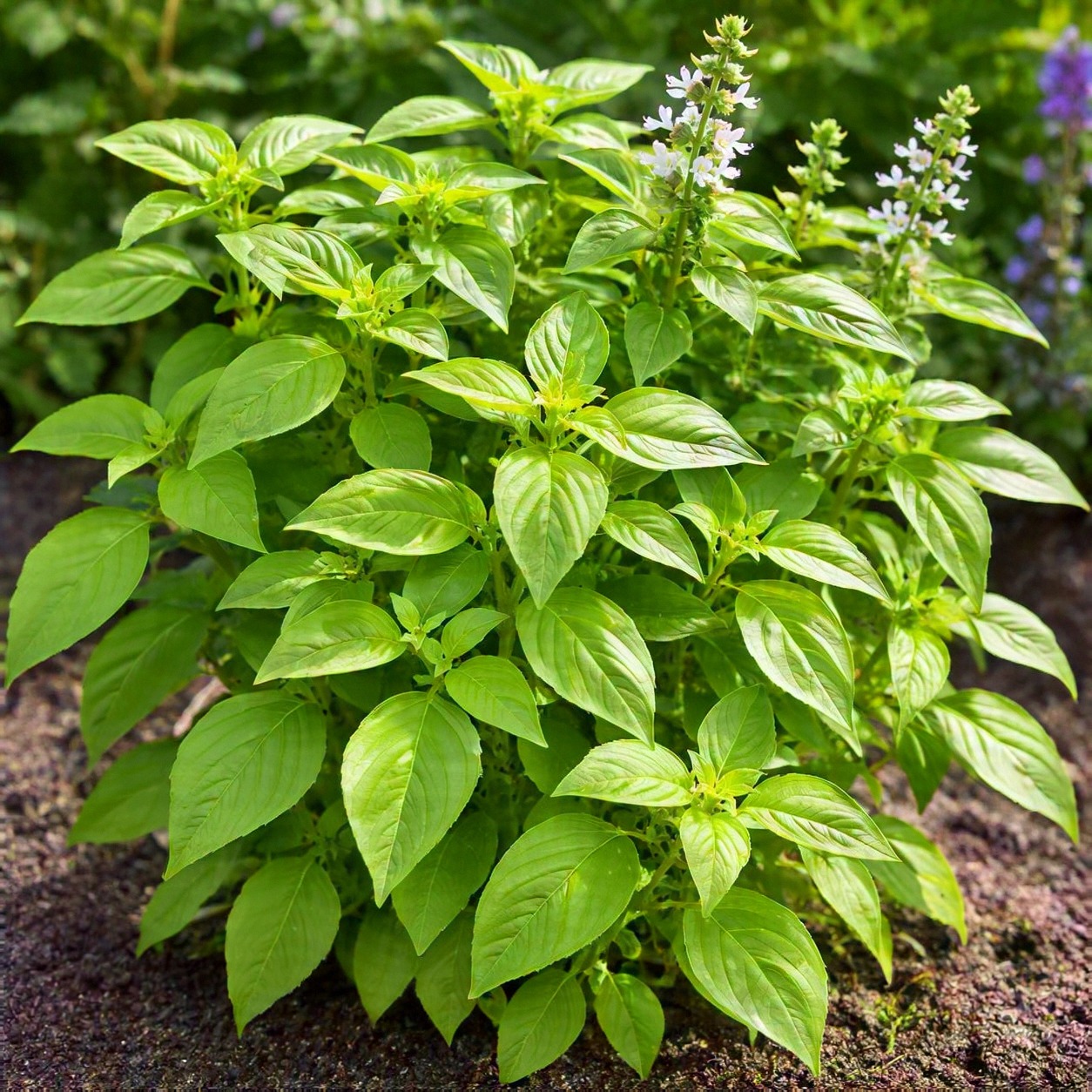
| Basil (Ocimum basilicum) | Soil is barely dry at the surface | Never let the pot dry out completely. Keep it off cold glass at night. |
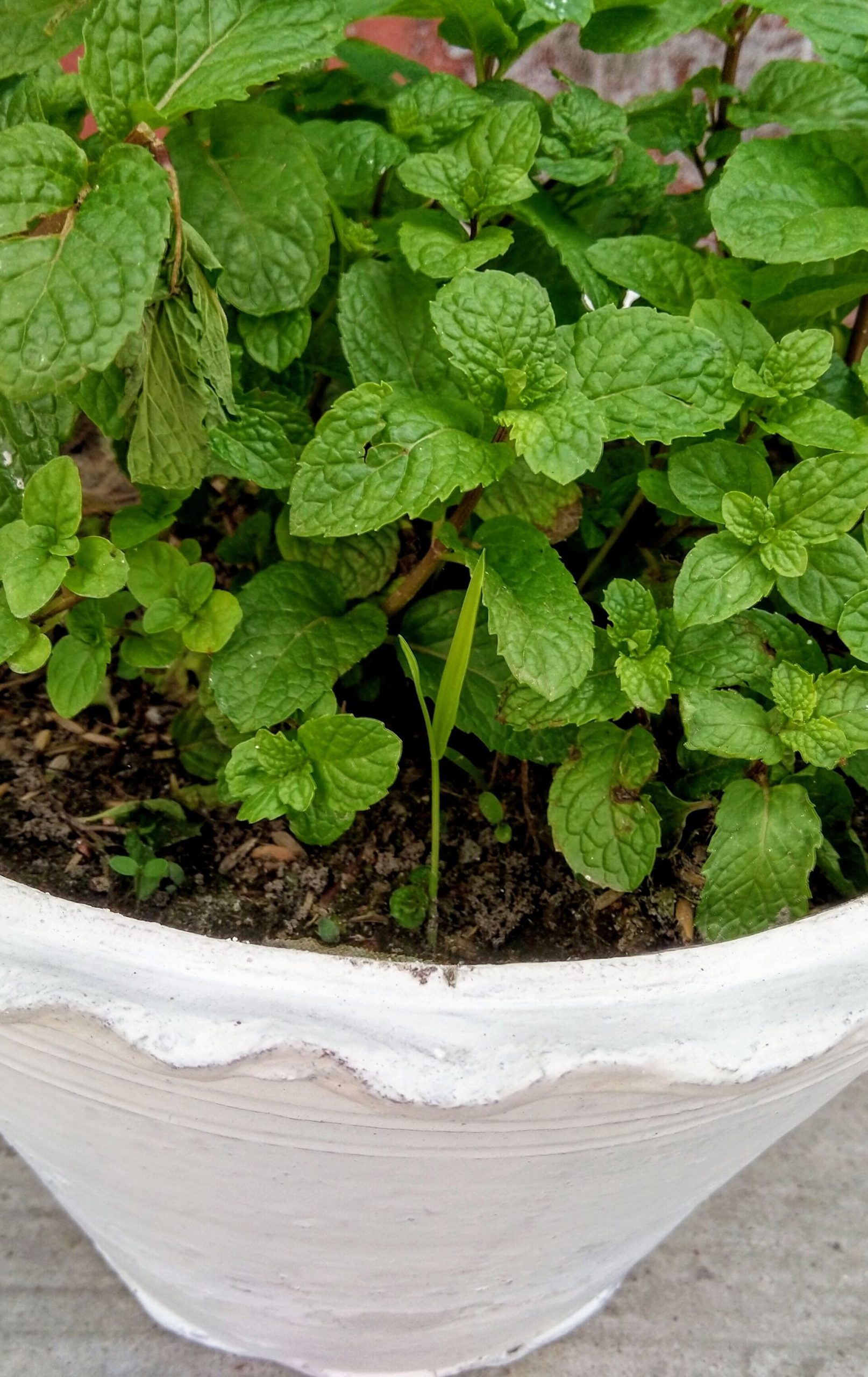
| Mint (Mentha spp.) | Top 1 inch (2.5 cm) is dry | Likes more moisture than rosemary, but still resents standing water. |
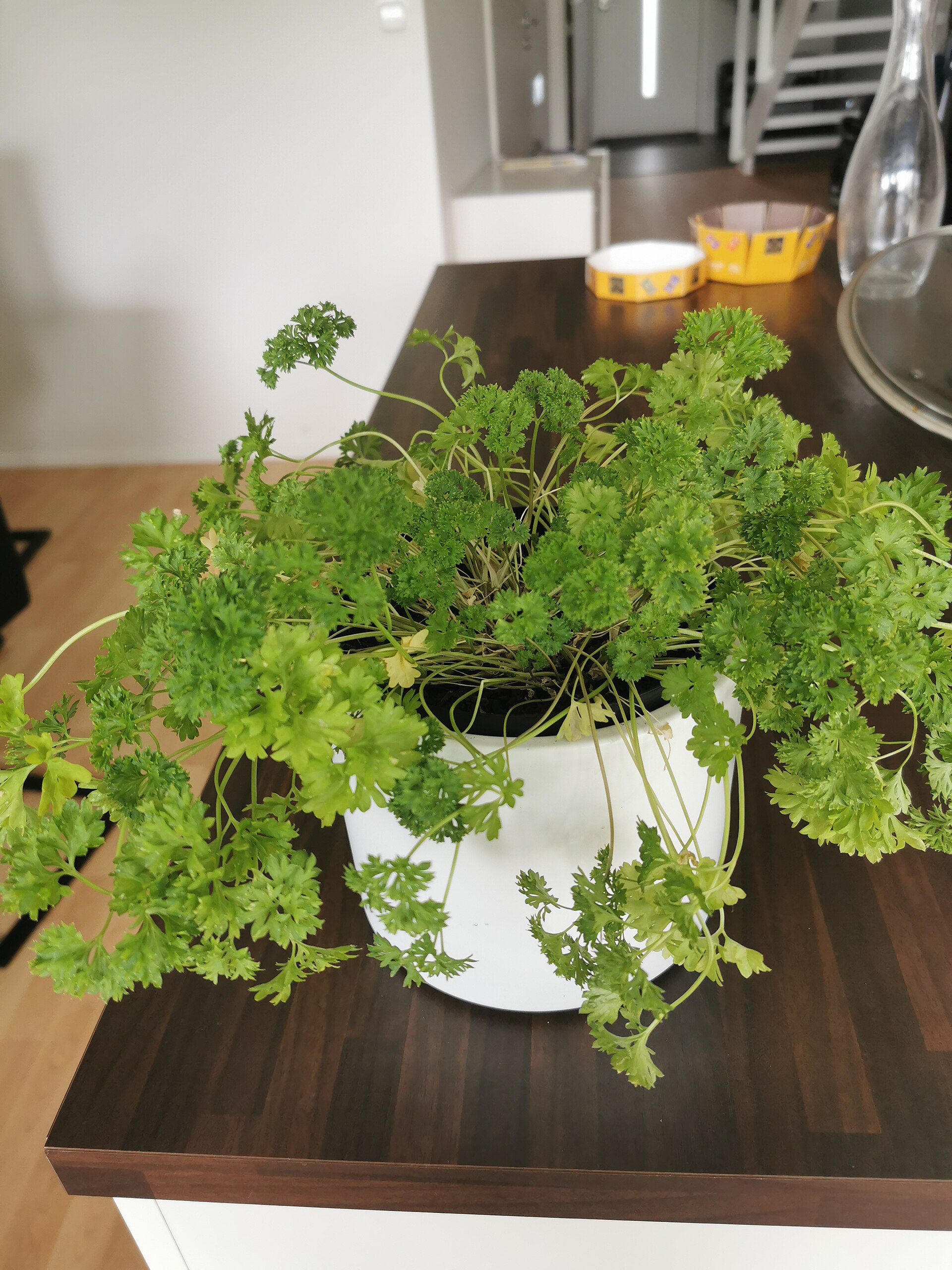
| Parsley (Petroselinum crispum) | Top 1 inch is dry | A biennial: it flowers and declines in its second year, so plan to replace it. |
| Chives (Allium spp.) | Top 1 inch is dry | Tolerates less light and cooler air than basil. |
| Rosemary, thyme, oregano, sage | Top 1 to 2 inches (2.5 to 5 cm) is dry | Terracotta pots help. These are the herbs most often lost to overwatering. |
Common Winter Problems and What They Mean
Most winter failures show a clear symptom before the plant collapses. Read the symptom, fix the cause, and give the plant two or three weeks before deciding it is finished.
| What you see | Likely cause | What to do |
|---|---|---|
| Long, pale stems with small leaves | Not enough light | Move to a brighter window or add a grow light for 12 to 16 hours a day, then pinch the stems back. |
| Yellow lower leaves, wet soil, sour smell | Overwatering and poor drainage | Stop watering, check the drainage hole, and repot if the roots are brown and mushy. |
| Crisp brown leaf edges | Dry air from heating | Move the pot away from heat vents, group plants, or set pots on a tray of moist pebbles. |
| Tiny black flies around the soil | Fungus gnats | Let the top inch dry out, use sticky traps, and apply a Bacillus thuringiensis israelensis product according to its label. |
| Fine webbing and speckled leaves | Spider mites | Rinse the undersides, isolate the plant, and treat with insecticidal soap according to the label. |
| White fuzz on the soil surface | Mold from cool, wet, still air | Scrape it off, improve airflow, and water less often. |
For pests, follow the product label exactly and treat only the affected plants. Indoor sprays drift, and a windowsill is a small space.
Season, USDA Zone, and the Spring Move
USDA hardiness zones describe how cold a plant survives outdoors, so they do not decide whether a windowsill works. A zone 5 gardener and a zone 9 gardener face the same indoor limits: light, water and night temperature. Zone matters again in spring, when the pots go back outside.
The herbs themselves differ. Basil is grown as an annual in almost every climate and is perennial only in frost-free zones 10 and 11. Rosemary is hardy outdoors to about USDA zone 8. Mint survives outdoors to roughly zone 5, which is why it is often the last herb standing in a cold garden. Parsley is a biennial and will flower and fade in its second season wherever it grows.
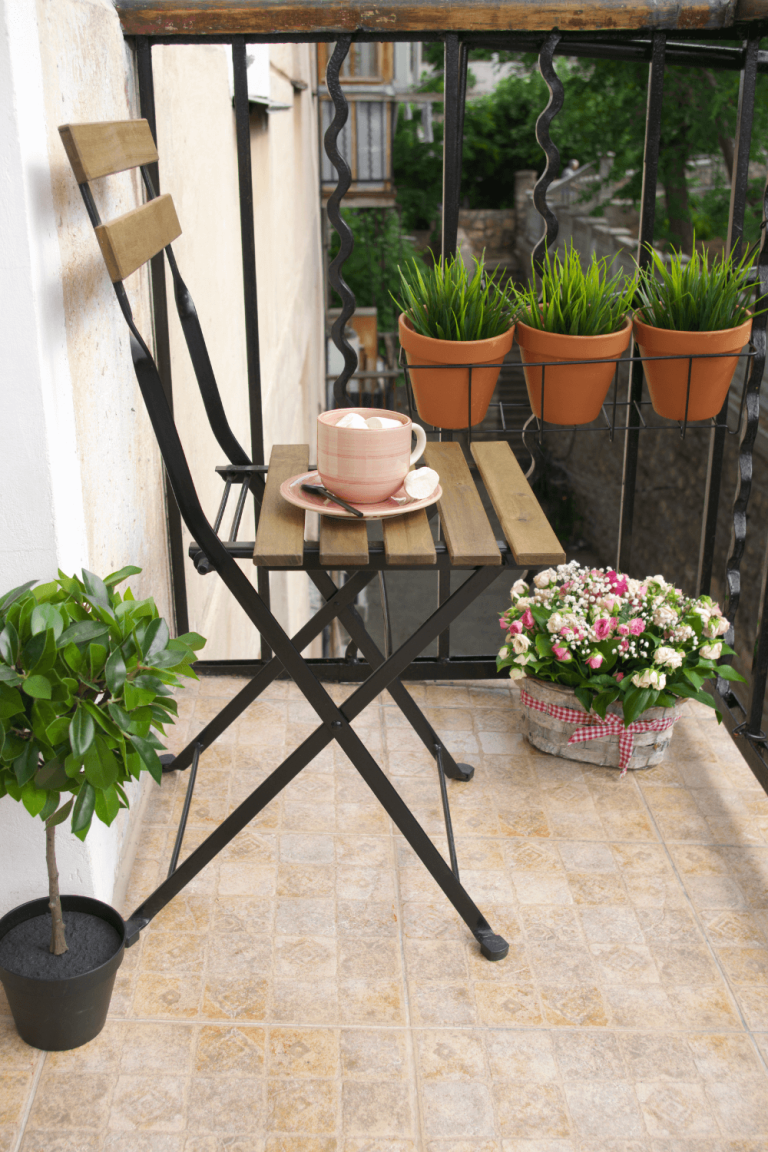
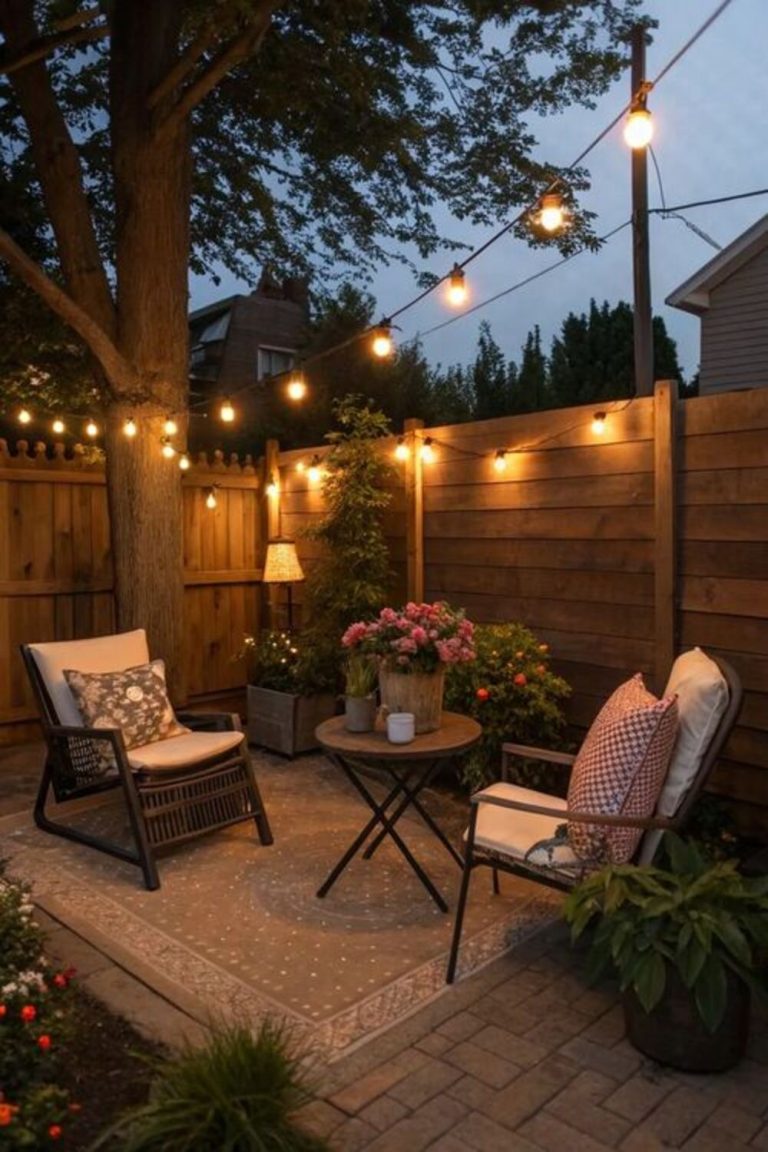
When night temperatures stay above 50°F (10°C), harden plants off over 7 to 10 days: an hour outside the first day, then longer each day, out of direct midday sun at first. Bring them back in at night until the last frost has passed. Gardeners working on a balcony or a small paved corner can treat the pots like any other container display, as in these small patio ideas.
FAQ
Can I keep the basil from the grocery store alive?
Sometimes, but it needs work in the first week. Those pots usually hold many seedlings crowded into one small cell, so roots compete for water and air. Split the cluster into two or three pots, bury the stems a little deeper, remove the lowest leaves, and keep the plants in the brightest spot you have. Expect a shorter life than a plant you raised from seed.
Will herbs grow in a north-facing window?
Not on window light alone. A north window gives no direct sun, and only the most shade-tolerant herbs, such as chives, cilantro and lemon balm, manage with 2 to 6 hours of direct light. Add a full-spectrum LED for 12 to 16 hours a day, or choose a brighter window.
Should I fertilize indoor herbs in winter?
Only if they are growing. A plant under a grow light and pushing new leaves can take half-strength fertilizer every two to four weeks. A plant that has stalled should wait until late winter, when longer days restart growth.
Sources
- Penn State Extension, Growing Herbs Indoors (updated November 2024).
- Iowa State University Extension, Growing Herbs Indoors (reviewed November 2023).
- University of Maryland Extension, Growing Herbs in Containers and Indoors (updated March 2024).
- University of Illinois Extension, Keep growing with herbs indoors this fall, winter (October 2023).
- Missouri Botanical Garden Plant Finder, Salvia rosmarinus.
Featured image: ElisabettaCastellano / Wikimedia Commons / CC BY-SA 4.0.