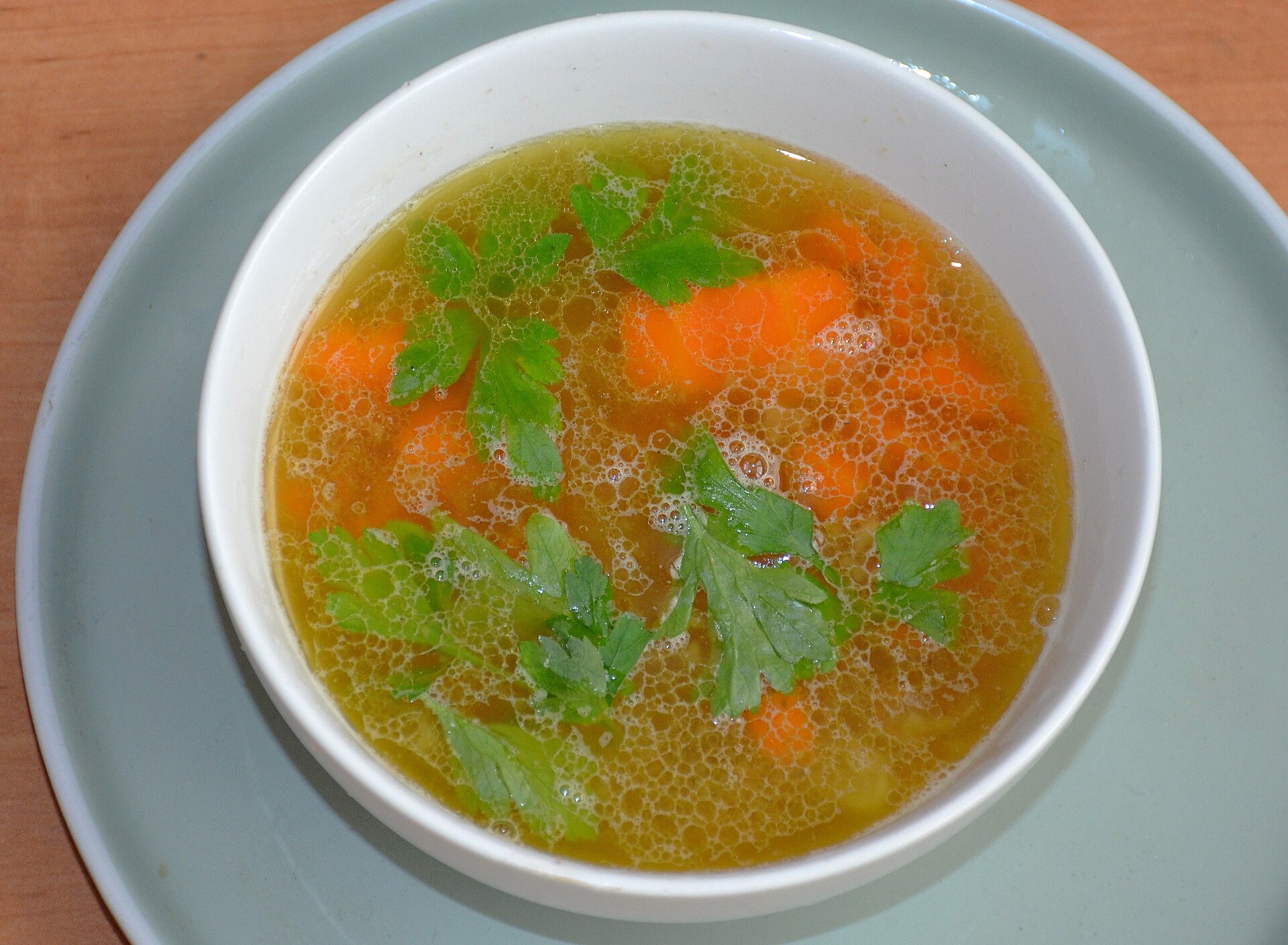
How to Make Turkey Stock From the Thanksgiving Carcass
Most of the turkey is gone by Friday morning, but the frame, the wing tips and the pan juices are the best stock you will make all year. Making turkey stock from carcass is a one-pot job: this guide goes from the picked-over frame to a strained pot you can freeze in meal-size portions, and it points out the two places where home cooks get into trouble: cooling a deep pot too slowly, and keeping the stock too long.
The method is built on Penn State Extension’s tested procedure for chicken and turkey stock, with USDA FSIS limits for cooling, refrigerating and reheating. If the holiday is still ahead of you, the Thanksgiving checklist and dinner timeline covers thawing and roasting times.
Quick Answer
Turkey stock from carcass to strained pot takes one burner and about an hour, most of it hands-off. Cover the bones with cold water, bring them to a bare simmer and cook for 45 minutes (Penn State Extension); simmer 2 to 3 hours if you want a deeper, more gelatinous stock (Serious Eats). A carcass from a 14-pound bird makes about 6 cups (Washington State University Extension).
- Cool the strained stock to room temperature within 2 hours, then refrigerate it at 40°F or below (Penn State Extension; USDA FSIS).
- Use it within 3 days in the refrigerator (Penn State Extension); USDA FSIS allows 3 to 4 days for refrigerated cooked leftovers.
- Reheat to 165°F, and bring soups and gravies to a rolling boil (USDA FSIS).
Ingredients
The amounts below follow the Washington State University Extension turkey stock recipe, which is built on a 14-pound roasted bird and makes about 6 cups. A carcass from a 12- to 16-pound turkey fits the same pot.
- 1 turkey carcass from a 12- to 16-pound roasted turkey, broken into pieces that fit your pot
- 3 cups chopped onion
- 2 cups chopped carrots
- 2 cups chopped celery
- 2 rosemary sprigs
- 4 thyme sprigs
- 2 bay leaves
- 1 tablespoon black peppercorns
- Cold water, enough to cover the bones by 3 to 4 inches (Washington State University Extension); Penn State Extension covers by 1 to 2 inches for a more concentrated stock
- Salt, added after straining rather than at the start
Penn State Extension seasons stock lightly and warns that over-seasoning is the bigger risk, because the stock goes into dishes that are already salted. Taste after the stock is strained and reduced, then add salt.
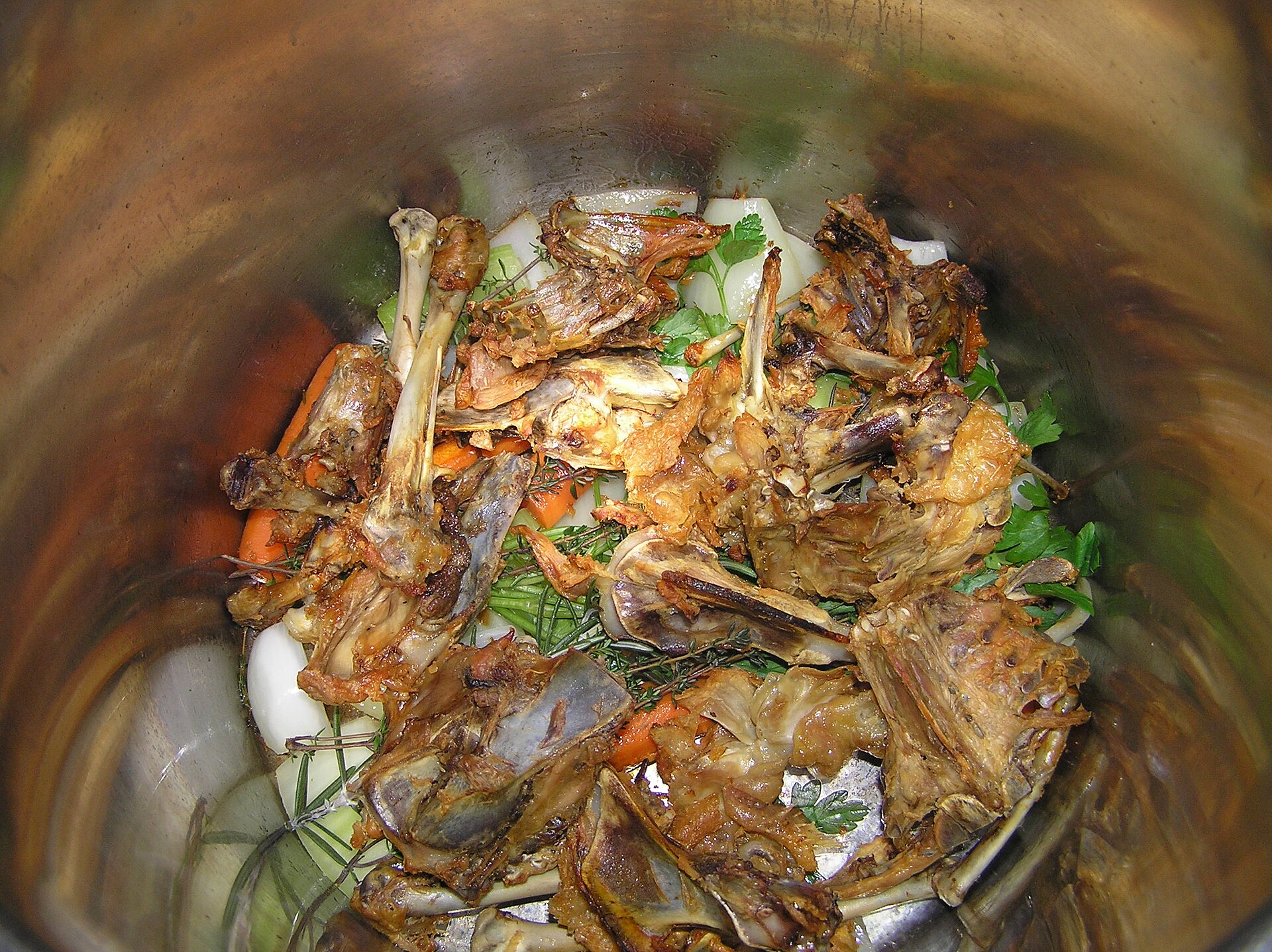
Turkey Stock From Carcass, Step by Step
- Refrigerate the carcass fast. Pull out any stuffing, pick off the meat you want to keep, and get the carcass into the refrigerator within 2 hours of the bird coming out of the oven, or within 1 hour if the room is above 90°F (USDA FSIS).
- Break it up. Cut or snap the carcass into pieces small enough to sit below the rim of your largest pot. For a darker, roastier stock, spread the pieces on a sheet pan and roast at 425°F for 20 to 40 minutes first (Food52).
- Load the pot. Put the bones in first, then add the onion, carrots, celery, rosemary, thyme, bay leaves and peppercorns.
- Cover with cold water. Add enough cold water to cover the bones by 3 to 4 inches (Washington State University Extension), or by 1 to 2 inches if you want a more concentrated stock (Penn State Extension).
- Simmer, never boil. Bring the pot to a simmer, then lower the heat so the surface only trembles. Cook 45 minutes for a light stock (Penn State Extension), 2 to 3 hours for a richer one (Serious Eats), or 4 to 6 hours for the deepest version (Washington State University Extension). Skim the foam that rises, and top up with hot water if the bones break the surface.
- Strain. Lift out the large bones and vegetables with tongs, then pour the liquid through a fine-mesh sieve into a second pot or a large bowl.
- Cool it fast. Divide the stock among several shallow containers, or set the pot in a sink of ice water and stir. Either way, the goal is room temperature within 2 hours (Penn State Extension), and then into a refrigerator set to 40°F or below (USDA FSIS).
- Chill and skim. Leave the stock in the refrigerator overnight. The fat firms on top and lifts off with a spoon (Penn State Extension).
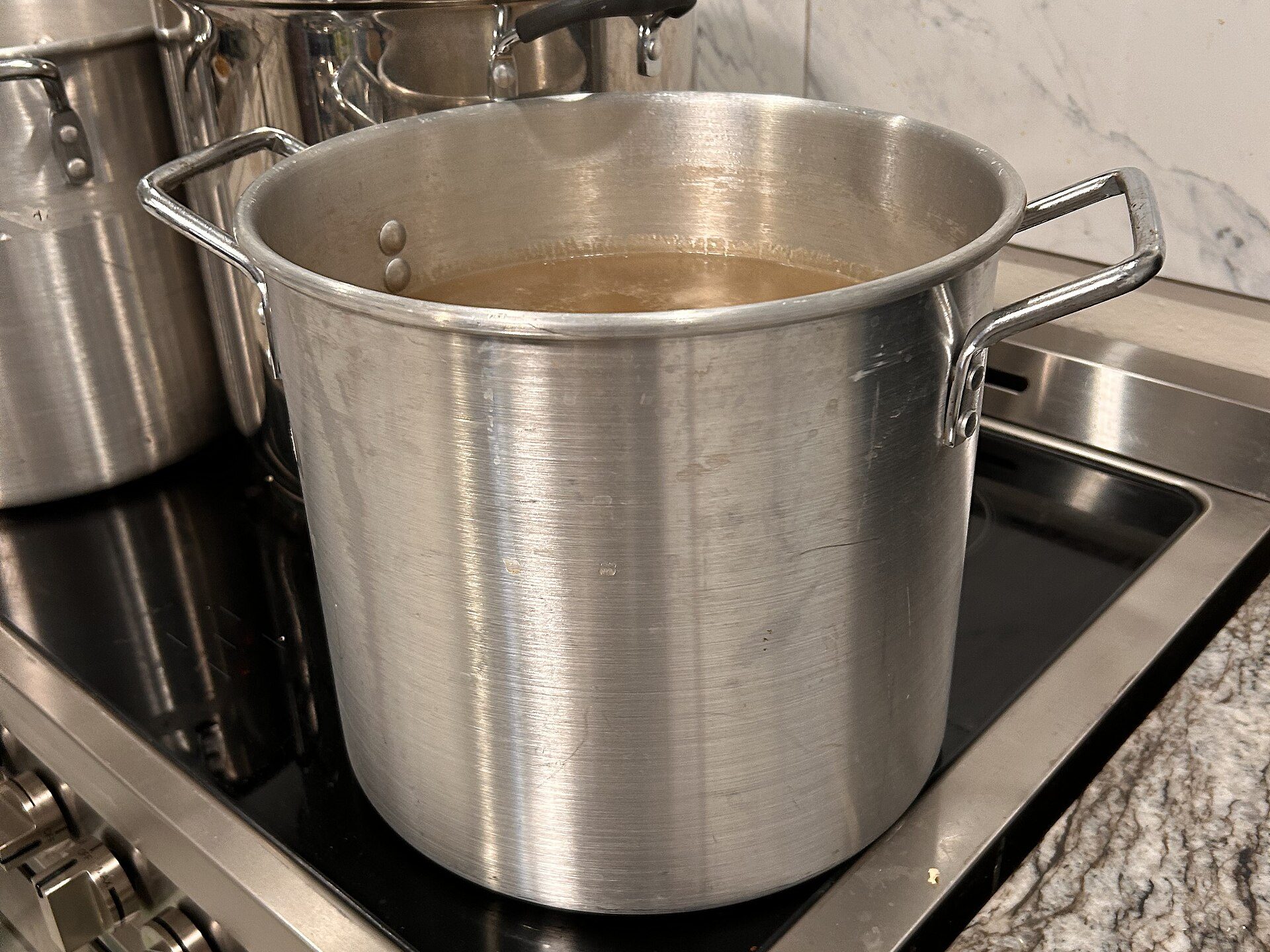
Storage and Reheating
Refrigerate the strained stock and use it within 3 days (Penn State Extension). USDA FSIS gives 3 to 4 days for refrigerated cooked leftovers, so a 3-day limit keeps you inside both. Label the container with the date: USDA FSIS notes that the bacteria behind foodborne illness do not generally change the taste, smell or look of a food, so it can seem fine after it is no longer safe to keep.
For longer storage, freeze it. USDA FSIS gives frozen leftovers 3 to 4 months for best quality; after that they stay safe but can lose moisture and flavor. Penn State Extension suggests wide-mouth mason jars or freezer containers with headspace left for expansion, and thawing in the refrigerator rather than on the counter.
Reheat stock to 165°F, and bring soups and gravies made with it to a rolling boil (USDA FSIS). A quart of stock is also the start of gravy for a second holiday table; the Christmas dinner main dishes and Christmas side dishes guides both lean on pan drippings and gravy.
FAQ
How long does turkey stock last in the fridge?
Three days, following Penn State Extension’s storage guidance for homemade stock. USDA FSIS allows 3 to 4 days for refrigerated cooked leftovers, but the shorter limit is the safer one to put on the lid.
Should I roast the carcass before making stock?
It is optional. Food52 roasts the broken carcass at 425°F for 20 to 40 minutes to darken the stock and deepen the flavor. Skip it if you want a pale, mild stock for soups, or if the bird was already deeply browned.
Can I make turkey stock in a slow cooker?
Yes. The Modern Proper cooks it on HIGH for 8 to 10 hours or on LOW for 12 to 16 hours, with the carcass almost covered by water. Cool and store it exactly as you would the stovetop version, since a slow cooker does not make the cooling step any faster.
Why is my turkey stock cloudy?
A hard boil is usually the cause: vigorous boiling breaks fat into tiny droplets that stay suspended in the liquid (New England). Keep the pot at a bare simmer, and strain through a fine-mesh sieve. Cloudy stock is still safe to eat.
Can I freeze stock in glass jars?
Yes, if you leave headspace for the liquid to expand. Penn State Extension recommends wide-mouth mason jars or freezer containers, filled short of the rim, and thawed in the refrigerator.
Sources
- Penn State Extension, Preparing and Preserving Your Own Chicken or Turkey Stock
- USDA FSIS, Leftovers and Food Safety
- USDA FSIS, Refrigeration and Food Safety
- Washington State University Extension, It’s Time for Turkey
- Serious Eats, Turkey Stock Recipe
- Food52, How to Make the Best Turkey Stock
- New England, Turkey Stock Tips & Recipes
- The Modern Proper, How to Make Turkey Stock